Our Approach to Education | The Value of Following Interests and Learning How to Generate Wealth

In our family we approach education from the perspective of helping our kids build their career from the earliest age possible. I’ll share year by year what it looks like:

Ages 2 to 4:

We read stories together about people who do great things.

Ages 5 to 9:

Ages 5 to 9 we help our kids understand that they can create something of value or add value to something to generate wealth. This understanding of the power to create value sparks an entrepreneurial mindset that is the foundation of future success.

Here are ways we did this:

– At age 8 Isaac learned to take 50 cents worth of glass, stone and metal beads, create a bracelet using beautiful designs and color schemes and then sell the bracelets 2 for $15.

At age 10 Isaac learned to use my scroll saw to take $8 worth of pine and turn it into 10 wooden swords that would sell for $10 to $15 each.

-at ages 5, 7 & 9 I got a booth at a winter festival for Leah, Ember and Lilly where they could each sell a their handmade crafts that were perfect stocking stuffers. They each took low cost materials and made a variety of items to sell, they made hundreds of dollars.

– At age 5 Rachel would pick out children’s books at yard sales, usually 10 to 25 cents each, and resell them for $2 to $5 each at a farm store we volunteered to help out with.

– At age 7 Esther had a bath salts business, taking 30 cents worth of salts and essential oils, packaging them up pretty to sell for $4 each.

Ages 9-12

At around age nine the focus of school begins to shift from play, exploring, experimenting, learning to read, and starting tiny businesses to a focus on the child’s passions, hobbies and career dreams.

Whatever each child is passionate we begin to allow them to dive deeply into that passion so they can become experts on the topics they love, and learn relevant skills and knowledge.

We allow them to study and research that passion so diligently that they need to begin using high level learning materials to satisfy the level of curiosity that they develop, often reading adult level materials and getting involved in real world experiences based on their passions. For Laura, at age 11, we built an aviary so she could have a bird sanctuary for her rescued birds. Our son Joseph needed a piano. Our daughter Abby needed a kiln for her pottery hobby. Ember needed a garden. Chrissy needed tons of yarn. I would also participated with the kids in these hobbies and enjoy learning alongside them.

At this point we provide field trips, volunteering opportunities, training and provide the child with a personal library and access to documentaries about that topic. We get them some professional quality tools to help them explore, and lessons if possible.

We focus on basic academic skills related to the child’s passion. This is the model of learning through age 13. The kids are welcome to change their focus as they either spark a new interest (one thing often leads to another, or they get bored because that interest was not really their element.

Ages 13-20

In the early teen years the child is encouraged to embrace a passion and begin to turn it into a career. For their birthday we celebrate the theme related to their career dream. This is the key: the kids know it’s coming!

They know leading up to this day that if they want to start a business they need to propose a vision to us parents and we will spend over $1000 to invest in what they need to launch, and we will pair them up with an apprenticeship, coach, courses, masterclass or trusted friend who had succeeded in the trade or calling they want to pursue.

I have paid $100 a week for private lessons or coaching – one on one from an expert. We do this instead of college, and it’s much more affordable.

Instead of traditional high school math, my kids learn economics, civics, business, marketing, social media skills, consumer and business technology, and leadership. We get their books on these topics at the FedEx office book rack, and we use the Uncle Eric Series by Blue Stocking Press.

Ages 13-18 each of my kids are permitted to let go of any expectations related to education that steal time from their business development, career goals and training. And we don’t give them phones and devices until those things are essential for their business marketing work.

They are not free to use devices in an unlimited way, the devices are locked down to eliminate time wasting behavior, they also have time limits and only run approved apps. The goal is for the teen to not be distracted.

We don’t ever give the kids money or buy them things they want, unless it’s Christmas or a birthday, but even on these days our gifts are empowering and often related to their passion. And now, we give the gift of time.

It has been said that it takes about 10,000 hours to become world class in your trade. Between ages 13 and 18 the kids are diving into their work, business, skill building and experience- and getting in their 10,000 hours.

They get jobs or create jobs to generate funds to support their passions and callings. They often pay for their own mission trips, camps, travel, and such. We often pay for educational expenses.

In my experience they have all built businesses that be one sustainable to support them before age 20. Not only are my children incredibly skilled, they are confident, happy, and live low stress lives with a focus on relationship.

During the teen years we do have required reading for our children, and they participate with the whole family during morning devotions, and social studies discussions, and we eat meals together where we have wonderful conversations.

The older kids help teach the younger ones, and everyone is responsible for different parts of our home, to keep them clean and to contribute at meal times. We give each child a lot of experience learning through hospitality and missions. We also give each child an opportunity to participate in the family business to be able to produce books about their passions and earn some passive income through publishing.

Our kids usually have a major project before graduation that sometimes requires a larger investment, not always. Sometimes they need a setting where they can accomplish their goals. Isaac needed a recording studio and film-making equipment- he generated the income to pay for it at age 17.

Esther wanted the family to move to Hawaii so at age 16 she could launch her photography business in a very strategic way. It worked out!

Anna needed to go to Poland and LA to produce her first album.

Naomi needed us to move to a farm in Indiana where she could get horses.

Rachel and Susie needed us to turn a barn into an art studio.

Laura needed a camera and phone and a job at a bakery at age 15 so she could fund her many travels as a teen travel blogger. The rest of the kids generally didn’t get phones until 17.

In our experience, each child has followed a unique path, based on their own gifts, passions, callings and unique opportunities. We don’t put them on the same track, requiring them all to do the same thing. Each one thrives and shines in their own way, and we are delighted to avoid paying for college! By investing early in their career dreams they are able to become exceptionally skilled and achieve a level of maturity and ability that is not common in today’s teens and young adults. They are capable of supporting themselves while living their dreams, well before their 20’s.

People may think that our methods are expensive or require too many life changing actions.

What this method does not require is the expense of a degree (often $100,000+). We don’t have to send our kids off alone to other states and cities, uprooted from their families, friends, community, church and the lives they have built… to detach completely from the foundation we built in childhood. At college our children are often trained in a pattern of thinking that isn’t congruent to the values of our family, often causing depression, disillusionment and detachment for the young adult.

We will do whatever it takes to build the lives of our children on a strong foundation, and rather than uproot them, we simply provide them with wings, and they can land back at home whenever they desire.

Top Journals for 6th Graders

6th grade seems to be the grade nobody quite knows what to do with. Are they middle schoolers or elementary? Should we call them kids still? Fun-Schooling allows families to let their 6th grader find independence and autonomy in what can be a confusing season of growing up.

Since most areas place 6th graders in Middle School, we also suggest you check out our post of tips for Fun-Schooling Middle School.

Our journals are super flexible in terms of age. You’ll see kids age 8 through 18 using the same journals. It’s all in the materials you use alongside them. Kids can repeat the same journal- especially core journals. Some kids have done the same core 4 or 5 times!

The Top Fun-Schooling Journals for 6th Grade

Bundles for 6th Graders

Bundles are great for this age because they invite independence and provide structure. We include a lesson plan kids can follow along with.

Here are our 6th grade bundle options. Click the image below to be taken to the suggested lesson plans and journal descriptions. We have one bundle that’s more girl focused, another that’s boy focused, and one for kids with Dyslexia/ADHD or other learning challenges.

The journals from these bundles are available for sale individually on Amazon and most are PDFs on our website as well.

More 6th Grade Journals

These journals are also popular for 6th Graders

We suggest working through the single-country journals starting at this age if you haven’t started them yet, see our bundles for suggestions on the order to do them in. Start with your country’s journal first, if possible.

All About Dogs- Fun-Schooling Journal– Cover every subject with a fun dog theme. Kids will learn about dog breeds, jobs, and more. Even includes math practice!

Inventions & Inventors Students will study 30 of the most impactful lessons of all time. Space is included in back for them to research inventions of their own interest too.

Grades 6 to 8 Fun-Schooling Journal is one of our most in-depth core journals. This is a Christian-based journal with tons of variety and Bible study included.

Top 30 Grammar Mistakes dives into the most common Grammar mistakes and gives students plenty of practice using proper grammar rules.

Tropical Birds Research Journal Students will research, finish activities, color, and enjoy breathtaking photography of 26 different tropical birds.

Yum-Schooling 15 recipes to teach children how to bake, calculate, measure, spell, use logic, serve others, apply science, and be creative. Create delicious dishes to share with the whole family while working on building your skills and learning.


What other journals is your 6th grader using? Share in the comments to help other families!


Make sure to check out


About the Author- Amanda Osenga is a Fun-Schooling mom in Columbus, Ohio. She is also the social media manager and a Virtual Assistant for Thinking Tree. Her family combines Thinking Tree books with the Charlotte Mason method using books from Ambleside Online and Wildwood Curriculum. In her free time, Amanda is an avid reader and loves to be outdoors.

Sarah’s Mom Tip | Motivation of Love vs. Fear

Life Skill # One: How to feel motivated by love and a desire to create and explore- rather than being motivated by the FEAR of mistakes and imperfection!

Everything about traditional schooling is FOCUSING on a child’s mistakes and judging them by every little thing they do wrong instead of the many things they do right.

Success and happiness in schooling is based on getting nothing wrong. So kids grow up thinking that a mistake is a sign of failure.

Kids should be free to make mistakes in the process of mastering skills and studying academics. WHY? Because learning to work through life without being a PERFECTIONIST is one of the most needed skills!!!

How many of us think we will never be good enough?

Why are we hyper-focused on our own small shortcomings?

Why are we always obsessed with those three things we got wrong in a day instead of the 1,000 things we got right??? Yeah that time you yelled at your kid on Christmas Day!!!! But it’s really not a big deal!!! Look at all those beautiful moments you shared and those memories YOU created and all the love you poured into each gift under the tree!

So what’s going on here?

In school kids learn to make their lives revolve around perfectionism and fear of failure… or we just give up and believe that we will never be enough.

Please, don’t give in to this style of raising and educating children!!!

This is why Fun-Schoolers thrive! Fun-Schoolers are free, confident, creative, optimistic and comfortable with TRYING and TRYING again. Fun-Schoolers create journals and portfolios that show their progress and illustrate their personalities and passions. When your kids are fun-schooling they learn through real life skill building.

If you are afraid you will never measure up, if you are always focused on the shortcomings of the people you love, if you think that mistakes represent failures- you need to let go of all that pressure you grew up with when someone (everyone) tried to standardize YOU and put you in a box called “perfect”.

Try to rethink your own perspective on what is “good enough” but being grateful for the way you did 1000 things well yesterday, even it you flubbed up 5 or 10 times!!!! You were amazing! Move on from the failure mindset and embrace GRACE for yourself and your kids. And your spouse too!!!!

You can start the new year with NEW EYES that see the 1000 good things instead of those few faults… in yourself and in your world.

You are going to be okay. And I’m ready sorry that the stupid education system you grew up in told you you will never be good enough! It’s not true. You are a gift, a blessing, a treasure, you are worthy of love and what you do us good enough!

Top Journals for Middle School Students

Fun-Schooling helps Middle Schoolers transition from their childhood years to teen years by providing a perfect balance of structure and flexibility. Students can cover all the required subjects- and electives- in a non-threatening way. Your Middle Schoolers will be able to work at their own pace, pursue their interests, and work on a lifelong love of learning.

Lots of the journals Middle Schoolers use are also popular High School options. So check out both of our High School journal suggestions here and here.

Our journals are super flexible in terms of age. You’ll see kids age 8 through 18 using the same journals. It’s all in the materials you use alongside them. Kids can repeat the same journal- especially core journals. Some kids have done the same core 4 or 5 times!

The Top Fun-Schooling Journals for Middle School Students

Bundles for Middle School Students

Bundles are great for this age because they invite independence and provide structure. We include a lesson plan kids can follow along with.

Here are our Middle School bundle options. Click the image below to be taken to the suggested lesson plans and journal descriptions.

The journals from these bundles are available for sale individually on Amazon and most are PDFs on our website as well.

More Middle School Journals

These journals are also popular for Middle Schoolers

We suggest working through the single-country journals starting at this age if you haven’t started them yet, see our bundles for suggestions on the order to do them in. Start with your country’s journal first, if possible.

50 Creative Writing Prompts- Teen Girls and Teen Guys– Writing prompts with art to help your student get writing!

Reading Time– 180 pages to for your student to document what they are reading. Includes several different options for how to track their reading life- both personal and school books.

Grades 6 to 8 Fun-Schooling Journal is one of our most in-depth core journals. This is a Christian-based journal with tons of variety and Bible study included.

Travel Dreams 30 Fascinating Cities– Students will study each city as if they are planning a trip, covering various topics such as food, fashion, culture, history, navigation, tourism, architecture, and much more.

All About Butterflies– 200 Activities for students who are interested in butterflies, flowers, ecology, science and nature.

Pirate Pronunciation– If your Middle Schooler has not yet completed this journal, now is the time! This pirate-themed book includes cursive, art, poetry, story writing, comic creation, and more. It will teach even the most reluctant learners these important basics.

The Athletes Fun-Schooling Journal & Olympic Research Handbook For students who love sports! Cover all the required academic subjects and dive into the wonderful world of sports.

Life Skills Provides 36 essential skills to know before launching into adulthood. Includes fun hands-on activities and lots of practice opportunities.

Explorers & Pioneers– Students will research over 30 historical figures from worldwide and the ages. We have chosen to focus on a diverse assortment of men and women who impacted the world through their discovery, exploration, and pioneering efforts.

How to Make Money An interactive guide to uncovering passions, igniting ambition, and providing the practical tools needed to set and accomplish financial goals. Great for students to discover what they’d like to do in the future.


PEEK INSIDE these journals and more here

What other journals is your Middle School student using? Share in the comments to help other families!


Make sure to check out part 1-


About the Author- Amanda Osenga is a Fun-Schooling mom in Columbus, Ohio. She is also the social media manager and a Virtual Assistant for Thinking Tree. Her family combines Thinking Tree books with the Charlotte Mason method using books from Ambleside Online and Wildwood Curriculum. In her free time, Amanda is an avid reader and loves to be outdoors.

Homeschooling Middle School, Drama Free!

I have talked to countless moms who say their experiences in middle school are partly why they choose to homeschool. Middle school can be a confusing, overwhelming, and sometimes painful time. Fortunately, homeschooling middle school allows us to mitigate some of this. This is a transitional season between childhood and young adulthood. Today, we’ll talk about ways to make it a delight!

How old are most Middle Schoolers?
7th graders are usually 12-13 years old & 8th graders are usually 13-14 years old.

Typical Academic Ability for Middle Schoolers

  • May want to plan and take ownership over a lot of their schooling and scheduling.
    We highly encourage this!
  • Complete most work independently, but may still need some help/ enjoy working with you- friend learners will especially enjoy working with someone else.
  • School day is about 4 hours with lots of time left to explore their interests.
  • Can comfortably read independently.

    Math abilities-
  • Solid knowledge of addition, subtraction, multiplication, and division.
  • May still need assistance with long division and may not yet know all their multiplication facts.
  • Becoming more comfortable with fractions, decimals, and percents.
  • Can solve word problems.
  • Accurately count out money/ give back change.
  • Basic understanding of geometry.
  • Working on how to follow a receipt and convert to different amounts.
  • Can begin to focus on the math skills they’ll need in their everyday life.

    Language & Grammar skills
  • Can appropriately use slang & metaphor.
  • Know most of the basic parts of speech. 
  • Can write a short composition.
  • Some kids will still do best dictating to you and having you write or drawing instead of doing much writing.
  • Most are competent spellers for high frequency words and can sound things out w/ relative accuracy for other words.
  • Can give a good retelling/narration either verbally or in writing of what they’ve read.
  • Handwriting still needs to be practiced and lots of kids this age are working on cursive.
  • Copywork is still important & helpful.

Can be a challenging age as they move towards more independence and yet still need their parents.

Remember– This blog series is based on the average level for the grade/age. The bell curve is extremely important to remember throughout this series. Some children will fall outside of this average. We’re homeschooling middle school for a reason- so we can customize our children’s education to their unique academic level and needs.

Middle School Developmental Milestones

At this age, lots of kids get serious about their majors and developing the skills & knowledge they need for their future & may even start a business. This is also the age where families start focusing more on Life Skills and the tools they’ll need in adulthood.

Kids this age often have deep friendships, are passionate about pursuing their interests, and not as interested in traditional “play” anymore. Socially they understand body language, nuance, jokes, sarcasm, and puns more. Though these skills will continue to develop through adolescence. They may want to spend lots of time on sports, crafts, hobbies, and other activities. It’s not unusual for middle schoolers to spend hours perfecting something they’re learning about or working on a new skill.

Hormones are shifting intensely during these years. Some kids are fully in puberty by now and should have a good understanding of the changes they are/will go through and what puberty is. They’re often much more physically mature than mentally/emotionally- which can throw parents for a loop! Emotions can be wild and intense!!! Coordination, balance, and the way their body moves may be awkward/clunky like toddlerhood. Some may want to start dating (!) or have boy/girl friends.

Students at this age w/ learning disabilities, special needs, and learning differences are aware of their unique abilities. It’s an important time to help them see their super powers and unique gifting while also finding ways to help them develop a love of learning. This can be especially true for kids coming out of public school who may need a season of deschooling before doing much school work.

Middle Schoolers are notorious for questioning things more. They are wired to no longer take things at face value. This is a stage of rapid brain growth and you’ll see that in the questions they ask. Many like to start in debate at this age.

Let your Middle School students deep dive into their interests

Common Challenges Homeschooling Middle School & Tips to Overcome Them

Have a student who is sometimes spacey, distractible, or seems obsessed with something?
It’s 100% normal at this age. We jokingly call it the “Brain Dead Stage.”

Students who want to rush through or skip their work-
Check out this post for tips!

Students who have no idea what they want to major in
This post should help.

Students at this age may get overwhelmed or shut down with too many choices-
Try combining multiple subjects into one study. This is a good age for unit studies and in-depth journals.

Tips from Middle School Moms

E.A. says- “Give them more freedom, let them make more choices and give them more responsibility for their learning—they will rise to the occasion 😍 I have found that my middle school boys don’t love all the coloring….so we skip that, 1 loves the mazes, the other doesn’t so do what they like…that’s ok 😃 middle school is a hard time of child one day/teen the next and they sometimes want to do “little kid” things and then the next day “that’s for babies” 😂😂😂 sometimes it is hard to keep up 😂😂😂 lots of prayers, lots of conversations and lots of hugs (if that’s is ok today 😂)”

R.P. says- “One thing I’ve noticed with my middle schoolers is giving them the freedom to choose their learning/projects based off interests. One of mine strongly dislikes math but is super passionate about horses so we incorporated math in with the horse thinking tree book (measurement, calculating fence posts vs length needed etc) it’s made a big difference. I may request a presentation but it doesn’t have to be a written paper, sure make it a PowerPoint& verbal presentation 😉

L.G.- “My middle schoolers (grades 7 & 😎 like to do a combination of Fun schooling Journals, online Unit Studies or online courses in their majors. We also regularly incorporate games and movies as part of their learning. They like to get out of the house a couple times a week for library events, as well. I find variety works well for them. For Math they like Life of Fred, but we are taking a break and doing Kitten Math, a super fun book that uses practical math skills. The kids pretend they are fostering kittens. They all beg to do this book so it’s definitely worth a break from their regular math curriculum. They are also having fun learning Latin and Greek roots as a card game. I love teaching vocabulary through roots, as it gives them so much decoding ability when it comes to new and unfamiliar words. Mostly, I follow Sarah’s excellent advice and allow them to focus on their passions.”

S.H.- At this age, I feel like it’s especially important to keep prioritizing relationships over academics. Let them sleep. Let them eat good food (ALL of the food 😂). Let them take the reins as they grow & mature, and give them the freedom, the gift of time, to grow into the young man or woman God intended them to be. It’s a time to expose them to all sorts of different things & unique experiences so that they may discover their passions & dive into them fully.


We hope this helps you feel more prepared as you’re homeschooling your middle schooler.
Check out our post with the most popular journals for this age to plan your Fun-School Middle School.


Concerned about gaps in your child’s education? Check out this post.


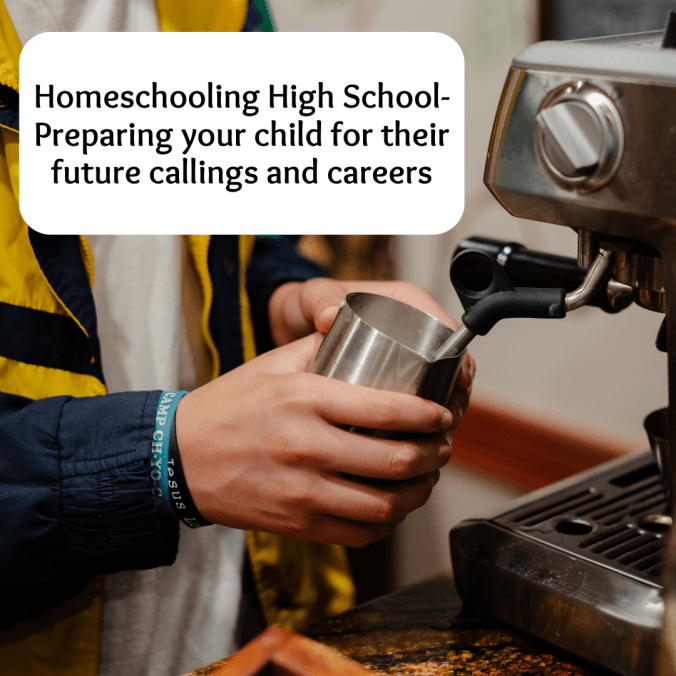
Homeschooling High School | Preparing Your Child For Their Future Callings and Careers

One of our focuses is having teens choose a major from a young age. We do this so they can focus on building the skills needed for their future careers and callings. Fun-Schooled teens who choose a major can graduate High School having already started their own business- or with an impressive portfolio to jump right into the work world. Last month, we talked about homeschooling college-bound teens. Today we will focus on homeschooling High School when your teen plans to enter the workforce after graduation.

Top Tips for Homeschooling High School

We said this last month, and it’s worth repeating today. Ensure you know the legal High School requirements for where you live. The HSLDA is an irreplaceable resource for understanding your local laws. Also, check out our comprehensive guide on assigning credits to journals.

If your student is not already actively selecting their school materials, now is the time to start. Let them select some, or all, of their journals and the resources they’ll use alongside them. It works well to offer 5-10 choices for your students to select from if they get overwhelmed by too many options. You can do this with journals and book selections.

Get help from your community as needed. This track focuses on the skills kids need to step into their future careers and calling. You may not know exactly what they need to know and that’s ok! Give your child a chance to interview a few people in their desired field to get answers. Shadowing and internships can provide valuable information and build skills.

It’s okay to repeat a journal completed at a younger age. Because students combine journals with academically appropriate materials, they will get a different experience. High Schoolers can go more in-depth than they did when they were younger. Plus, we know there will never be 100% retention on any subject of study. Repeating a journal will allow your student to get closer to mastery and pick up things they missed last time.

FAQs for Homeschooling High School

What if my student has no idea what they want to study?

Parents often tell us asking the question, “What is your future career or calling,” elicits a lot of “I don’t know” answers. It’s a huge question and can feel heavy for a lot of teens. We suggest asking “What do you want to do?” and “What do you want to know?” This can apply to things they want to do and know right now at this stage in life if needed. As they hone their skills, they’ll think through what they’d like to do later in life. Here are a few more tips for using these magic questions to jumpstart learning.

How do you select materials that are High School level appropriate?

Many Fun-Schooling families like to pursue Charlotte Mason-based book lists to select materials. Ambleside Online, Wildwood, Simply Charlotte Mason, and Sabbath Mood Science are popular options. From 7th grade up, these programs use High School and College level materials. Simply Charlotte Mason also has a great book finder that allows you to narrow down books by grade and search for a specific subject or keyword. You can also search “living books + (subject)” to find more.

Other families head to the library and ask librarians for help. If you do not live near a library, most libraries have a free option to chat with a librarian online and get suggestions- or you can call. They’ll be able to help you choose age-appropriate materials and provide lots of great suggestions.

You may also get support from your local public high school. Some public schools are more supportive than others of homeschoolers. We’ve heard of teachers being willing to sit down with homeschool families and offer suggestions for materials.

As mentioned above, interviewing someone in the student’s desired field is a wealth of information. They likely have books and resources they’ll lend your student- or can provide plenty of titles and websites.

What about learning gaps?

Don’t fear “gaps.” All students come into life with gaps; learning everything we are taught is impossible! Once they’re in the workforce, they are so well equipped to know how to learn that they’ll be perfectly capable of filling in any gaps. Students can take courses at a community college if there’s something specific they have to know for their future career or calling that they can’t teach themselves. Check out this post for a few other thoughts on gaps.

How does Fun-Schooling help a student prepare for their future career or calling?

We have written several blogs about this which I will reference below. The short answer is that Fun-Schooling lets students dive deep into their field of study. It teaches them how to learn and gain skills. Students are set up for success for a lifetime no matter what career path or calling they choose- or how many times they change their path throughout their lives. The skills they will develop at home will help them find success no matter what they hope to do one day.

How and Why to Choose a Major at a Young Age
Choosing a Major & Why 13 Is the Magic Number
Transitioning Toward Adult Life
Raising Employees?

What are the top journals for High School students to use?

Find out the most popular journals High Schoolers preparing for their careers and callings in this post


More tips for high school homeschoolers


About the Author- Amanda Osenga is a Fun-Schooling mom in Columbus, Ohio. She is also the social media manager and Virtual Assistant for Thinking Tree. Her family combines Thinking Tree books with the Charlotte Mason method using books from Ambleside Online and Wildwood Curriculum. In her free time, Amanda is an avid reader and loves to be outdoors.

Top Journals for High School Students

Fun-Schooling journals provide students with the skills they’ll need to be successful in their future careers and callings. Students get to dive deep into their desired field of study and enter the workforce after graduation with 4+ years of mastery behind them.

High Schoolers can use any of our journals. These featured journals we’ve created specifically to help teens dive into their careers and callings. Just because a journal isn’t featured here, doesn’t mean they can’t use it! And teens can repeat journals they completed at a younger age alongside different age-appropriate materials. We often have students who continue using Fun-Schooling journals as young adults to continue learning.

The Artist Fun-Schooling Journal Art majors of all abilities will be challenged by various art prompts and encouraged to explore their creative interests. Students will approach learning as a whole and cover math, reading, language arts, and more while studying art.

The Animal Lover’s Fun-Schooling Journal Designed for students majoring in animals. Great for students who are going into zoology, veterinary medicine, or another animal-based field.

The Athlete’s Fun-Schooling Journal Document learning in multiple school subjects while also exploring different sports. Covers traditional sports such as basketball and baseball and unique sports like breakdancing and kayaking.  Students will even learn about chess as a sport!

Camera Quest offers students the chance to do a deep dive into the world of photography. Students will learn techniques and get lots of practice.

Design a Dress Students majoring in fashion will get to design dozens of different dresses. Also popular for teens who are exploring modesty and their own sense of style.

The Baker’s Fun-Schooling Journal & The Chef’s Fun-Schooling Journal For students majoring in culinary arts, cooking, and homemaking. Also helpful for students to learn how to cook before they live on their own.

Guide to Birthwork A research guide for aspiring mothers, midwives, doulas, lactation consultants, childbirth educators, nurse-midwives, and OB-GYNs.

Life Skills Provides 36 essential skills to know before launching into adulthood. Includes fun hands-on activities and lots of practice opportunities.

High School Homeschooling Handbook allows students to cover all the major subjects in one journal. Students can select materials that fit in with their passions and future goals while completing this journal.

The Singer and the Songwriter journal and creativity journal Step-by-step exercises to inspire and improve your songwriting skills. As well as easy-to-follow steps through exercises and workouts designed to enhance your vocal skills.

The Songwriter’s Fun-Schooling Journal For songwriting and theater majors of all abilities.  While studying songwriting, students will approach learning as a whole and cover art, math, spelling, language arts, and more.

How to Make Money An interactive guide to uncovering passions, igniting ambition, and providing the practical tools needed to set and accomplish financial goals. Great for students to discover what they’d like to do in the future.

The Writer’s Fun-Schooling Journal Students majoring in writing or who will need writing for their future careers will love this journal. Includes writing prompts, character development, storyboards, oral practice, lyrics, tips, and more.

PEEK INSIDE these journals here

What other journals is your High School student using? Share in the comments to help other families!


Make sure to check out part 1-


More About Fun-Schooling High School


About the Author- Amanda Osenga is a Fun-Schooling mom in Columbus Ohio. She is also the social media manager and Virtual Assistant for Thinking Tree. Her family combines Thinking Tree books with the Charlotte Mason method using books from Ambleside Online and Wildwood Curriculum. In her free time, Amanda is an avid reader and loves to be outdoors.

Top Journals for College-Bound Homeschoolers

Are overwhelmed about how to prepare a homeschooler for college? Do you wonder if your homeschooler can get into college? Concerned about ensuring your college-bound homeschoolers will be successful in their courses? Today we’d like to offer a few suggestions to help bring peace of mind and set your homeschooler up for success in their next stage of life.

College-bound homeschoolers can use any of our journals. However, a few have found a particular niche/ families say they’ve been especially helpful in preparing their students for college. We even have students who continue using Fun-Schooling journals in college for notes, research, and journaling!

High School Homeschooling Handbook/ Just for Teen Guys High School Handbook contains almost 500 pages for your student to document learning in all the required subjects. Some students have even used this to show their prospective University during interviews.

All About Money– Economics & Business. This is especially important for college-bound homeschoolers pursuing a business or finance degree. Moms tell us it is usually enough to fulfill a High School economics credit. Use it alongside Whatever Happened to Penny Candy by Richard Maybury. Many families also like to use the Life of Fred Financial Choices book.

10/12 Subject Portfolio is an attractive and easy way to document learning in multiple subjects all in one place. Students have used this for college admissions meetings to show their work and edreading ucation. It’s also one of the most popular options for college students to be able to keep track of all their notes in one notebook.

How to Write Research Papers and Essays is an essential guide written by a college professor. It is a must for college-bound homeschoolers that they’ll reference again and again.

American History Timeline is a comprehensive journey through American history. This is one of our most in-depth journals. Students can use documentaries, podcasts, and books to meet the required hours for their high school credit. Many families like to pull books from Charlotte Mason-based booklists like Beautiful Feet Books and Ambleside Online to bring history to life.

Learn Any Foreign Language allows students to learn any language naturally and flexibly. Many Universities require a Foreign Language for admission. This is a journal students may want to bring with them to college as they continue their language learning.

Make Your Own Book of… we have about a dozen “make your own” journals. These are blank inside and the perfect place for students to take notes, make a portfolio, and document their learning. Students also like to bring these to college to take notes.

Master Class allows students to create their own portfolios as they work their way through online or in-person classes. We’ve had many Fun-Schoolers present these to college admissions counselors to display their work.

Picturing the Past is a Charlotte-Mason-based picture study journal of 75 historical paintings. Students use this as a guide for not only understanding art but also to gain a better foundation of history. It is especially great for college-bound homeschoolers looking to study history or the arts.

Pondering the Past exposes students to 30 works of Classical Literature. Some students use it as is for a general overview of the books. Others get more high school credits by reading some, or all, of the books. It’s also a popular journal to combine with Picturing the Past and the American History Timeline to build a more comprehensive picture of each historical era.

90-Day Homeschooling Planner allows your student to manage their school tasks, chores, appointments, and goals in one place. Help them build a habit of using this in High School, and they can continue using it in college.

Brain Games build skills in creative thinking, problem-solving, logic, reasoning, math, reading, spelling, and more. Plus, they’re a great way to relax and give your brain a break! College students also enjoy them as a nice reprieve after a busy day of classes.

Top 30 Grammar Mistakes dives into the most common Grammar mistakes and gives students plenty of practice using proper grammar rules. Even if your child completed this in a younger grade, repeating it to pick up rules that didn’t “stick” is a great idea. Many families like to combine the Life of Fred Grammar books to fulfill one (or more) credits- and they can often test out of intro-level college grammar with these books + this journal.

Spelling Time: Top 150 Misspelled Words helps students learn the most often misspelled words in a fun and engaging way. This is another journal worth repeating more than once to ensure each word is properly learned.

Viking Vocabulary is our most advanced Language Arts journal. We specifically wrote it as a college-prep journal. Students will learn tools invaluable to them in their college education. They’ll also build a stronger vocabulary and have fun learning about Vikings. Use alongside the Viking section in American History Timeline to do a deep-dive into all things Vikings!

Pocket Core Journals- These are 60-Day core journals that cover all the basic subjects in a smaller size. Students love these for on-the-go learning. Two cover options, boats and birds. They are also popular with students who have learning or physical disabilities or other learning challenges as they have much less writing space on each page.

What other journals are you having your college-bound homeschoolers use? Share in the comments to help other families!


Make sure to check out part 1- Is Fun-Schooling Enough for Students to Go from Homeschool to College?


More About Fun-Schooling High School


About the Author- Amanda Osenga is a Fun-Schooling mom in Columbus Ohio. She is also the social media manager and Virtual Assistant for Thinking Tree. Her family combines Thinking Tree books with the Charlotte Mason method using books from Ambleside Online and Wildwood Curriculum. In her free time, Amanda is an avid reader and loves to be outdoors.

Is Fun-Schooling Enough for Students to Go From Homeschool to College?

“I love this approach, my children are delighted to learn. I’ve never seen them light up like this before with schoolwork. But is it enough for them to get into college?” I’ve answered dozens, if not hundreds, of messages like this from mothers over the years. We’ve seen many Fun-Schoolers successfully go from Homeschool to College. While our students can’t walk into their high school guidance counselor’s office, today we’ll offer a few tips and resources for your college-bound student.

To Dos for College Bound Homeschoolers

First and foremost, make sure you know your state/country’s legal High School requirements. Your child’s ability to graduate with a valid diploma depends on ensuring the proper laws are followed. We have found the HSLDA to be an irreplaceable resource for understanding your local laws. This is good research to do in between 8th and 9th grade before your student starts high school.

Next, check with the school(s) your student plans to apply to. You can’t start too early. Freshman or Sophomore year is a good time to start looking. Ask specifically for resources for homeschooled students. As home education has grown in the last few years, many Universities provide guides for what they’re looking for from kids who didn’t attend traditional school. Also ask about standardized tests, prerequisites, and credit requirements for admissions.

Ensure you know how to write a strong transcript and assign credits. Last year we wrote a comprehensive guide to doing this as a Fun-Schooler. Don’t forget about volunteer work, jobs, clubs, athletics, etc. when considering what to include on this transcript!

How does Fun-Schooling prepare a student to go from homeschool to college?

One of the biggest advantages we’re giving our children through Fun-Schooling is teaching them how to learn vs teaching them how to study. Schools teach kids to study for a test and memorize rote information. We ignite a love of learning in our children which helps store the information for the long-haul. Fun-Schooling parents with kids in college have told us how impressed professors are with students’ abilities to learn and hold onto information vs spitting it out for a test and then forgetting it.

Fun-Schooled students often work above their “grade level,” and in many cases can test out of courses once they get into college as well. By giving them a chance to deep dive into their passions and providing them with a broad feast for learning, they’ll often come into college able to knock out several courses before they even begin.

Don’t fear “gaps.” All students come into college with gaps, it’s impossible to learn everything we are taught! Students can take courses at a community college if there’s something specific they have to have in order for admission. Once they’re in school, they are so well equipped to know how to learn that they’ll be perfectly capable of filling in any gaps. Check out this post for a few other thoughts on gaps.

Tips from Fun-Schooling Moms

Here are a few tips from Moms who have Fun-Schooled and then seen their kids go from homeschool to college-

  • Jennifer- “Better to be over on transcript than have no idea what you’re doing!”
  • Samantha- ” If one college is asking for you to jump through outrageous hoops because you’re home educated then try another. Some schools require FAFSA even if you don’t qualify for financial based aid in order to issue and awards and merit. Make sure any dual enrollment you do will actually transfer, not all do. Look out for free application days through common app or the schools.”
  • Laura- “Start in 7th grade with your child investigating careers, what degrees are required for various degrees, do they need an AA/AS or a BA/BS, or will they need to go onto grad school, etc. Have them start with state schools and examine entrance requirements and degrees offered — if they are interested in social work but looking at a school that doesn’t offer that program, then they know to cross that off their list. Have them look at what courses are required in majors of interest — if Calculus 3 is going to be required and the student detests math, then there is a need to reevaluate plans or learn to enjoy math 😉. Once the students have researched, work with them to set up their high school plans, coordinate courses the college requires for admission, state homeschool requirements, and any additional passions they wish to pursue. Explore dual enrollment options in your area – some states provide free or reduced rates for high school students taking dual enrollment at local community colleges. Explore study skills – while some kids intuitively know how to study, take notes, etc., others need step-by-step instructions in things like Cornell Notes and the SQ3R method for reading a text. The majority of post-secondary schools are only concerned with transcripts listing course titles and grades/GPA and test scores. Still, others, particularly private or smaller schools, might ask for course descriptions, lists of books read, etc., so it’s always a good idea throughout high school to have your student keep a running doc of books read. While some schools are test optional now for admission, some states or colleges still use test scores to qualify for merit money. I always recommend taking the SAT and ACT once and then re-taking the one they scored highest on. There are plenty of free or low-cost options to study for the SAT/ACT, so there is no need to pay hundreds of dollars for test prep classes. Using the Thinking Tree Journals is great prep because it helps the student take ownership of their learning and teaches them to read, watch, listen, explore, and then record their viewpoints. I will put a plug in for exploring Purdue Owl, how to cite appropriately in both MLA and APA papers, and the importance of using recognized sources – not just google searches and Wikipedia 😉. Help your student learn to find resources for topics they don’t understand in their math or science, such as Quizlet, crash course videos, or other YouTube videos. If your student is not accustomed to using a TI83/84 calculator, then have them use YouTube videos to learn the basics. Make sure by the end of Junior year that your student knows the application dates, particularly at more selective colleges. Some colleges use application dates for things like housing priority, etc. If you have a student with a documented disability, you’ll want to apply for accommodations to the ACT and College Board (SAT) by the end of the 10th for testing in 11th. Your student should also reach out to potential college Accessibility Offices to determine documentation requirements to apply for college accommodations and to inquire about typical accommodations offered to students with disabilities similar to them. If your student has a disability, it is also wise to begin learning to use certain devices or resources such as Learning Ally and Bookshare, Livescribe pens, notability, screen reading software, speech-to-text, Grammarly, etc. In addition, it is a good idea for them to role-play requesting accommodations and how to approach professors once approved by the accessibility office if the student is not already accustomed to requesting accommodations and discussing their needs and how their disability impacts them.”
  • Rosanna- “Just because a college says something on their website doesn’t mean it’s what they do AND sometimes they have things NOT on the website they want- we applied to one school that said we needed to submit a full list of all materials studied /books used, and test scores for Homeschooled students- our girl was accepted and although she opted to NOT go there this year, they never asked for any of that info. Also, private schools can also be as cost effective as public universities because they give tons of scholarships. Take advantage of school visit days if you are close, because they often give scholarships for that- my son had a $1000 knocked off his tuition for going to the full day event. Another $1000 for having a friend who was an alumni write a letter of recommendation. If your kids are ready, dual enrollment is a great way to cut cost- if they know what they want to do and where they are headed ask for a list of comparison classes needed to transfer- our school has partnerships with 20+ schools in our state my son was able to print a list from his desired school of what classes he needed to take at his school to start his transfer with the proper credits. I wish I would have pushed a little harder for at least 1 class per quarter for my older two- in dual enrollment- it is free in our county/state except for lab fees and books- my last one will be taking advantage of it next year. I would say 1/2 of the students at the CC my daughter is starting at for her AA-Transfer degree are in Running Start (Our dual enrollment). ALWAYS fill out the FASFA- even if you have money saved – as said above it is used for more than grants. If your child has a diagnosed specific learning disability, know that many schools require a diagnostic test done in the last 3-5 years to access services … You also want to empower your student to advocate and talk to the staff as much as you can- they are the student, they are owning their new life and unless they sign paperwork to include you, you can’t even see their financial information, talk to anyone about anything at the school, etc. “
  • Elizabeth- “In my experience (have graduated 2 from homeschool) anything that was “missed” in homeschooling education can quickly be learned or they can take a class at community college to fill that gap…they will figure it out as long as they have a passion for learning and that is what funschooling does—it ignites their passion for learning and they have to take ownership of the learning”
  • Tammy- “Call the schools and talk to them about what they require and concerns you have! They want to help. My dyslexic daughter wrote a beautiful essay as one of her entrance essays about living with dyslexia. I think, we as parents worry too much sometimes about our kids when they will be perfectly fine. I know I had a melt down a few months ago, and you guys were amazingly encouraging! Unschool on my fellows moms and dads! keep going!”

Find out what journals college-bound homeschoolers most love to use in this post


More tips for college-bound homeschoolers


About the Author- Amanda Osenga is a Fun-Schooling mom in Columbus Ohio. She is also the social media manager and Virtual Assistant for Thinking Tree. Her family combines Thinking Tree books with the Charlotte Mason method using books from Ambleside Online and Wildwood Curriculum. In her free time, Amanda is an avid reader and loves to be outdoors.

Top Journals for Dyslexic Homeschoolers

Selecting materials for homeschooling a child with Dyslexia doesn’t have to be hard. We have over 300 journals written with a Dyslexia-friendly font. Your student can study all the required subjects and anything else they’re interested in.

While all of our journals are Dyslexia-friendly, we’ve found a few that are especially popular for Dyslexic kids- and adults.

Dyslexia Games

This is our most popular option for Dyslexia. It’s even used in schools and therapy centers. Not only does it help with symptoms of Dyslexia, it also helps with math, spelling, handwriting, logic, creative thinking skills, and more. Students may sometimes need to repeat a series, this is ok!

We offer three series-

Dyslexia Games Series A

Designed for use by new and struggling readers. Ages 5-8 is the most common age this series is used.
Is Series A for my child?
Can your child consistently read three letter words?  If not, Series A is the place to start, otherwise go for Series B to start.

Dyslexia Games Series B

For students who have foundational reading skills and struggle with grade-level reading/writing/spelling.

Is Series B for my child?

Can your child consistently read three letter words?  If so, Series B is where to start, otherwise, begin with Series A.
*After completing Series B, the student should no longer have reading confusion and will be ready for any normal curriculum or Series C.
*Students over 9 years old with serious spelling problems, should complete both Series B & C, but will not need Series A.

Dyslexia Games Series C

Students, and adults, who have problems with spelling, reading, writing, or math.

Is Series C best for my child?

Most dyslexic students over twelve years old can start with Series C and do not need to use Series A or B first. Some profoundly dyslexic 12+ year olds, may need to start at series C.

Dyslexia-Friendly Homeschool Curriculum Bundles

We have worked hard to carefully cultivate nine different curriculum bundles for homeschooled Dyslexic students. These contain everything your student needs for an entire year, including Dyslexia Games and suggested lesson plans.

While these each have a suggested grade, students can go up or down a couple of grades with no problems. If they see a bundle that delights their interest more and it’s not their “grade,” that’s fine. Make sure they’re getting the correct level of Dyslexia Games.

All of the journals in these bundles are also available individually via Amazon and most are available a PDFs on our website.

Peek Inside These Journals-

Check out our peek-inside video of a few of these journals from our private Facebook group.


Make sure to check out part 1-Homeschooling A Child With Dyslexia- Tips to Keep it Fun


COUPON CODES

Buy One Get one FREE Dyslexia Games
until October 12th with code
B1G1MC&DG2023
OR 25% off with code DyslexiaMonth2023 until October 31st
at https://www.funschooling.com/dyslexia-games

Buy One Get one FREE on all PDFs
until October 12th with code
B1G1funschoolingPDFs
at https://www.funschooling.com/bookstore-all-pdfs


More About Fun-Schooling With Dyslexia


Disclaimer- The content of this post is for informational purposes only and is not intended to diagnose, treat, cure, or prevent any condition or disease. Please seek advice from your healthcare provider for your personal health concerns prior to making any changes for yourself or your child.


About the Author- Amanda Osenga is a Fun-Schooling mom in Columbus Ohio. She is also the social media manager and Virtual Assistant for Thinking Tree. Her family combines Thinking Tree books with the Charlotte Mason method using books from Ambleside Online and Wildwood Curriculum. In her free time, Amanda is an avid reader and loves to be outdoors.