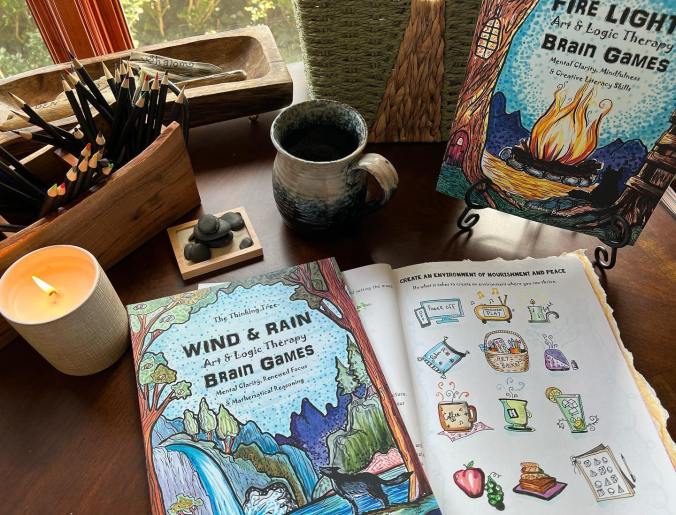
Over these years Josh and I have traveled to several countries. During our time in each one we would feel called to sing and pray over the land and the people. These books each represent the counties we have traveled to and have committed to intercede for. The Lord had called us, His Bride, His Children, to pray for all the nations, and this is just one little idea for how to do it. Creating a book of prayer and blessings for each place we pray for.
I feel so strongly that these prayers are heard and answered and God is working in the world through the release of our prayers, supplications, decrees, songs and words of blessings over land and people.
God has given the earth to humans, it is ours to care for, protect, and nurture like a garden. Humanity fails and blames God.
But… in fervent prayer for the lands, the nations, the people, the governments, the church, the religious leaders, the sick, the bound, the suffering ones, the lost… we bring forth blessing, light, deliverance, power and healing on earth.
“The heavens belong to the Lord but the EARTH He has given to the children of men.” Psalm 115:16
I want so much to be a good and faithful servant and leader in all the authority God has given me… over my family, and over these places in the Earth where I have a calling and where I have authority to bring the blessings of the Kingdom of God down to Earth. Through prayer God releases power. Power of angel armies, power to bless, power to heal, power to bring deliverance and salvation! Prayer brings light into the darkness.
If you say you are part of God’s family, I just want to encourage you to take your authority in prayer and supplication over your family and over the land you have walked upon to pray… “Your Kingdom Come! Your Will Be Done, on Earth as it is in Heaven!”
Being an active member of the Kingdom of God is a great honor, joy, blessing and a great responsibility. To whom much is given, much is required. Don’t squander your role in your family or your role in God’s family.
Sometimes a break from school really gives parents time to help a child with a problem area so she can go back to school with new skills and confidence.
How do you do it? I would just let them play most of the time but spend about an hour focusing on the problem area. It’s a great time for dyslexia therapy or some multiplication games.
Sometimes the school schedule is so packed that a break like this offers us a chance help our kids grow in a specific area so they can go back to school stronger in the problem area.
Also, some kids have passions that they don’t have time for during the school year. I have a daughter who was obsessed with parrots and endangered species. It was a perfect time to let her “major in parrots” and learn to dig deep into a topic she really loves.
So we put together a Fun-Schooling basket full of stuff that helps her research birds and Endangered Species. It’s easy to focus because she’s so passionate.
So, during a break from school I would suggest only two things:
1. Zero in on just ONE problem area so the child can overcome some of her struggles.
We use DyslexiaGames.com for reading, writing and spelling problems. It’s so easy to use.
Try Math Craft for problems with basic math and multiplication.
2. Give the child resources based on their passion, and really make time for that passion. What is your child passionate about?
It’s exactly what we would do on summer vacation since this is a chance to focus on strengths and weaknesses, letting everything else go.
Besides that, the kids can have a blast and stay busy being creative, playing video games, watching movies, cooking their own meals, exploring nature, training a pet, learning new skills, and being together. The possibilities are endless!
Josh and Sarah in May of 2022, and newly-engaged at 18 and 19!
Homeschool Mommy – Don’t forget that you are also a wife! (I know we have a few single moms here too.) We were just having a conversation about the guilt that some of us have experienced in the homeschooling community because we don’t always grind our own wheat, bake our own bread, do desk work for 6 hours, and look like pioneers. I think that it can be a beautiful life to do all that, I used to play pioneers with my children and do the whole classical education thing.
Here is the problem that I had… at the end of the day I was too tired from baking my own bread and arguing with my girls about wearing dresses… to give my husband all the love and cuddles he needed! So, first things first, you know! If what we are doing makes us too tired to be a good lover, we are doing too much.
Your marriage is first. The best thing you can give your children is the example of being an awesome wife who truly respects and adores her husband. Keep your husband happy, and let go of the things that make you tired at the end of the day. Save a bit of yourself for your lover. Give him your best. If you have little ones this may seem impossible… but it’s not. Find out what your husband and children really need and let go of everyone else’s expectations, and people who push academics as the key to success.
Follow the advice of the people you actually want to be like. If you have homeschooling friends who seem to have everything perfect, beware–their marriages are often suffering, and they have forgotten that they have husbands. Don’t trade your marriage in for the appearance of being a perfect homeschooling teacher. You are free to be a lovable wife, that girl that he married. That’s you!
I don’t worry much about reading before age 9. The longer they play the better! When my children start asking me “Mom, how do you spell…?” That’s when I know they are ready for reading. When a child is ready to learn to read it’s so easy to help them.
When it comes to learning to read there shouldn’t be a struggle. Dyslexic children and creative kids struggle because we are trying to teach them too soon. Dyslexia Games helps prepare the mind for reading and writing without stress, and helps to teach reading in a self directed way that works for creative kids.
Still, sometimes the brain just isn’t ready for the job of reading before age 9. For some it may be age 11– kids who learn to read late tend to be very artistic and creative.
The first key to inspiring a child to read is to find out what the child wants to learn about and be attentive to what he is passionate about. Provide books on ALL levels about those topics. Look at the books together, and use books with a Fun-Schooling Journal. Allow the child to do a lot of drawing in the Fun-Schooling Journal if they can’t write, and please do some of the writing for him or her while the child watches and dictates (writing for your child once a week is enough).
The second key is to model a love for reading real books and writing on real paper – in front of your child – that’s what Mom-School books are for. When a child sees a parent reading and writing (not on a computer) they automatically desire to do it too. The brain is wired to give children a drive to do what adults do. (One big problem with classrooms is that all the kids are the same age, and kids are not getting an example of how people learn at a higher level.)
Curiosity will drive the desire to read, and the brain will begin to wire itself to read, write and spell. When a child is curious about reading they are going to learn quickly and efficiently. When a child feels the need to read, they WANT to learn.
When you try to force kids to read, write, and spell before they desire to do it naturally you are going to face a constant struggle. If the child desires to learn, they are going to be active in the learning, and actually teach themselves – it’s beautiful and joyful.
So, precious homeschooling mom, if your eight year old can’t read, don’t worry, just remember the two keys!
Joe does passion-based homeschooling. He is in charge of his education and uses Fun-Schooling Journals, Tuttle Twins Books and a lot of Usborne books.
Real life has no instructions. All children grow into adults who encounter situations and opportunities where no one explains what to do. We want our children to think and be innovative. Almost all normal schoolwork is based on following instructions and memorizing information. At our house we don’t do that.
When I created all of my homeschooling books I created them for my kids. I am specifically designing a method of learning to inspire thinking, problem solving and innovation. Because my kids have dyslexia and Asperger’s (like me), we are not going to follow a normal path. My kids would never make good employees so I don’t expect any of my children to be employees. I expect them all to have an awesome work ethic and to be business owners and managers of their own families and homes. The public system is training millions of children to be employees – who have a very watered down work ethic. I would never choose to hire common core kids. That’s not our goal, so we are traveling a unique path. Each child is unique and so we focus on their gifts and interests.
Now, they will learn to be good workers because I am giving them all opportunities to learn by working in the home and the family business, and they serve with missionaries and in church. When they volunteer, they really shine.
I never actually expected so many other people jump in and use my books, but I think that your children will really be blessed and your families will enjoy homeschooling with these methods.
I wasn’t creating school books that will help the children to fit into a mold that prepares them for “higher education”. SORRY! My goal is for my children to be innovative business owners with steady incomes by age 20, who do not need “higher education or an extended adolescence” to prepare for real life. If your child needs that, go for it! No shame! It’s all good! We need all kinds of people in the world. Just don’t plan your child’s education based on an antiquated view of what education should be.
Knowing our goals, I try not to waste my children’s time, brain space, and energy on schoolwork that doesn’t prepare them for real life. I am a bit of a rebel, and sometimes I worry that my kids might miss something… but they are proving me wrong. Whenever my teens need to learn something simple or complex, they get it done! They rarely ask for help anymore (unless they are trying to open a bank account, need a new computer, need an investor, or are filling out forms to become Amazon Associates).
Our kids are all excelling in their own way, developing their own talents and starting their own businesses – often before I even have a chance to show them how. They all have strong faith and family values.
One thing I have them do is read popular adult level books on marketing, business, and leadership. I also have them building websites and creating real books at a young age – check out our “Notebooks for Creative People” on Amazon. We don’t use textbooks, we always use well-written and interesting REAL books by passionate experts on every subject we want to study. We don’t just unschool, (though it works on many levels) because I really want to pass on my favorite books, family values, faith and traditions.
Sometimes I wonder what will become of all these creative thinkers and innovative children who adore my books. I would like to know what your children are passionate about, and how you are helping them to learn!
Here are some ideas for how I try to turn a bad day into a good day.
1. Turn on “Just Dance” for the kids on YouTube.
2. Don’t try to do school as planned. Find a funny way to repurpose a page in a workbook or Fun-Schooling Journal. Let your kids turn the Nature Study page into a Zombie Study page.
3. Take a break from everything that is stressing anyone out.
4. Get out of the house, with or without kids. Preferably without. Haha!
5. Get out a board game or UNO. If you want the older kids to be busy for a long time offer a nice prize to the winner of the Monopoly game.
13. Ask husband to take a bunch of kids to a park. (If you are a single mom, reach out to grandparents or fellow mom friends for a swap play date…and then return the favor!)
14. Get everyone outside for Nature Study.
15. Make an early dinner.
16. Tell the kids that we will have a movie night if they get the house clean, and turn on the happy music while they work.
18. Send a group of older kids to the corner market to get ice cream for everyone.
19. Figure out how to turn tonight into a date night.
20. If all else fails, ask husband to put the kids to bed early. Then clean your room really nice, set out a treat, light a candle, turn on peaceful music, ask husband to bring the wine, lattes, or fresh squeezed orange juice. Be sure to sweetly ask husband to get the kids to bed while while you take a long hot shower. In this case HE WILL do what it takes to get the kids to bed early!
I love to make up stories that teach little lessons to my children. Here is one of their favorites, that they want to hear over and over.
Four Sisters and the Chocolate Chip Cookies
There was once a family with four sisters. The oldest girl was about eleven her name was Lily. Next was Lucy, she was eight. The six year old’s name was Seashell, and the toddler’s name was Daisy.
One morning their mom woke up early to bake chocolate chip cookies for a Valentine’s Day party. After the cookies came out of the oven she started making breakfast. The smell of the cookies filled the house as the daughters woke up one by one to wander into the kitchen.
Lily came into the kitchen first. She saw the big plate of cookies on the counter, warm and yummy. She saw her mom at the stove cooking breakfast. “Good morning mom! Are these the cookies for the Valentine’s Day Party? They look yummy!” She didn’t ask for a cookie because she knew that she would have some at the party; besides she didn’t want to spoil her appetite for breakfast. Her mom smiled, and told her they would be leaving for the party after breakfast.
Lily was helping her mom set the table for breakfast when Lucy came skipping into the kitchen. “Mom! I want a cookie! I NEED a cookie now!” Her mom stopped stirring the oatmeal and explained that breakfast was almost ready, and she could have cookies at the party. “That’s not fair, why do I have to eat oatmeal? I want a cookie! All the other moms give their kids cookies before breakfast! Why can’t I have a cookie now?” The mom didn’t give in, and Lucy had to wash the mixing bowl, sweep the floor and and scrub the cookie sheets, and every time she complained her mom gave her another job. It wasn’t long before Lucy quit whining about the cookies.
While Lucy and her mom cleaned and cooked in the kitchen, little Seashell peeked around the corner. She could smell the cookies, and now she could see them. She was in the other room when she heard Lucy throwing a fit. She really wanted a cookie but was afraid her mom would say “No.” Seashell took a look around the kitchen. When no one was looking, she snuck quietly into the room and grabbed six cookies, hoping no one would notice. Once she had stolen the cookies she dashed into the bathroom, hid in the bathtub and ate everyone of those cookies. The first four were really yummy, but the next two gave her a tummy ache. She wasn’t so sure if she would feel like going to the party after all.
Rachel, 2012
It was almost time to eat breakfast when little Daisy toddled into the kitchen. She saw the cookies and could not resist. Before anyone could stop her Daisy reached up to grab a cookie, but instead of taking one cookie Daisy grabbed the whole plate! All the cookies came crashing to the floor–what a mess! Smashed cookies were everywhere, all mixed up with the broken glass from the shattered plate.
Lily rushed into the kitchen, picked up Daisy and carried her out of the room so she wouldn’t step on the glass. Daisy was crying, but then she noticed that she still had one cookie in her hand, that’s when she stopped crying. Lily helped her mom make another batch of cookies, but there were no more chocolate chips, and they were late to the party. Most of the family had a lot of fun anyway… well everyone except Seashell, who felt so sick from all the cookies she had stolen that she couldn’t enjoy all the fun, games and treats at the Party.
After I tell this story to my girls I ask them what girl they want to be like, and everyone of them tells me that they want to be like the big girl, Lily. Then I ask them what girl they usually act most like, and they shyly confess that they usually act like Lucy and sometimes even like Seashell. This story always gives me a chance to teach them about the stages of growing up, becoming more mature, and developing self discipline, patience, and self control. I tell them how it’s normal for little kids to whine, sneak and make messes but big girls need to know how to make good choices. Then I will ask them if they want to pray and ask God to help them become more like Lily. This lesson has proved to be very powerful and effective in their little lives.
Most people didn’t believe me when I told them my teenage daughter wrote, composed, and professionally produced a full-length musical. Now I tell them that as a young adult, she’s seen her music workshopped and produced in New York City by a Broadway Production Team.
How does a child with severe Dyslexia go on to write a musical? I need to rewind a bit and tell you about the life of Anna Miriam Brown. She is my second of 15 children. Even before I had children I knew would homeschool. Anna’s older brother started reading with ease at age three. I figured she would follow suit and teaching her to read would be quick and easy. Learning to read was anything but easy for her.
We tried reading program after reading program. Nothing stuck. One day in frustration Anna said she was never going to learn to read and she didn’t need to anyway. She wanted to be an artist and a mommy so she wouldn’t need to read much. We came to realize she had Dyslexia and would not learn in the same way as my oldest. I started to come up with a way to help her learn to read. I created art games for her that incorporated letters and basic reading. You can read more of the story in the article about Dyslexia Games.
These games worked and my eight-year-old was able to read. My husband and I like to say that Anna was born dancing. She’s always loved music and watching musicals. Her primary focus in school has been music and she began composing songs at a young age. This passion for music has grown as Anna has become a young woman. (click here to read the story of His Story!)
Fun-Schooling wasn’t designed to work for every family.
So, who does it work for?
Who does it NOT work well for?
Instead of having to give it a try and discover it was a waste of time and money, let’s first get a few things out of the way.
1. Fun-Schooling is not for parents who love testing, grading and correcting their child’s schoolwork in order to make sure their child is standardized.
2. Fun-Schooling is not for parents who believe that education is all about discipline and perfection, all work and no play.
3. Fun-Schooling is not for parents who feel that children should not be allowed to follow their own interests but must study a formal curriculum designed by professionals. If you believe that your child will never be able to teach himself and needs to be taught through rigorous memorization of facts, maybe Fun-Schooling will be a disappointment to you.
4. Fun-Schooling is not for parents who want to play the roles of “teacher and student” rather than “parent and child”. If you want to teach your child every lesson and recreate school at home, maybe Fun-Schooling will not be a good match unless you and your child are both “friend learners or followers”.
5. Fun-Schooling is not usually a good match for parents who plan out every minute of every day to make sure the child stays on task. If giving your child freedom (balanced with responsibility) scares you, don’t Fun-School. You won’t be comfortable.
6. Fun-Schooling doesn’t work well for parents who love teacher’s keys and multiple choice workbooks with answers in the back. Our journals are very open ended and there are no answers keys or teacher’s guides. Why? Because the books are based on research and curiosity so one page in a Fun-Schooling Journal will be one-of-a-kind when a child completes the activities. For example the Journal may prompt them to choose their favorite extinct animal and write down four interesting things about it. Trust me. An answer key would not be helpful because your child’s answer is completely unpredictable.
7. Fun-Schooling is not for parents who do not appreciate creativity, imagination and fun. Seriously there are zillions of parents and teachers who work hard to keep schooling serious. If you are this kind of parent/teacher don’t waste your hard earned money and precious time on Thinking Tree books.
Do you have a child who can’t sit still and be quiet? GOOD! This may be a problem at school, but not in the real world. In today’s world you need a little ADHD just to get by.We must NEVER judge a child by his ability to be passive. Passive children often turn into passive adults, and that is a problem. Did you know that classrooms and desks were invented for the convenience of teachers, not for the best interests of the child?
Every child development specialist (and wise parent) knows that children need lots of time to play, imagine and invent. Children NEED to learn about the world around them by asking questions and experimenting. Children are naturally ACTIVE, ENERGETIC, IMAGINATIVE, CREATIVE, and NOISY. They were NEVER meant to sit still for hours on end and be passive. Why train up a generation of couch potatoes? Children were designed to learn through PLAY, DISCOVERY and by IMITATING their parents and the people around them. Do you realize that your child was smart enough to figure out how to walk, sing, turn on the computer, and learn a language by age two-and-a-half? With NO lessons! He wanted to be like you, so he figured it out on his own. How is it that we live in a society where passive children are rewarded, but creative and active children are punished. Real life does not work this way. Not anymore.
Contemporary schooling is all about controlling the child and training him to be a good student. A good student is expected to be silent, to stop asking questions, and to stop being active. The highest praise goes to the students who can follow a teacher’s instructions… instead of their own hearts. The applause goes to the child who can fill in the blank and memorize facts, not to the child who would prefer to explore his own interests.
Why? Because schools are designed to train people for institutional jobs. Schools were invented during the industrial revolution, at a time when the best job you could get was in a factory. Schools follow a model that require individuals to let go of all of their individuality. The child is trained from a young age to be a good employee who will work for the boss, no questions asked. The goal is to train them to complete assignments and be dependent on an authority figure to control the their time and activities.
During the 20th century almost all parents expected children to get a good education and a good job. The good education was expected to be the golden ticket to a good job. All the parent had to do was put the kid on the big yellow bus, no worries. The government would take care of everything, mom and dad could go to work, junior would spend all day in a nice school and get educated for free. The world has changed. People who want to live the “good life” are no longer finding good jobs. Many highly educated people are living on unemployment or living with their parents at age 35. Many people who own businesses are no longer looking for employees. Taxes are high, risk is high, minimum wage is more than they want to pay, minimum wage is less than an educated person is willing to work for anyway. (click Page 2 below to continue reading)