Fun-Schooling & “The Let Them Theory”: A Perfect Match

As a mother of 15 and the creator of Fun-Schooling, I’ve spent decades helping families embrace a natural, joy-filled approach to learning. Recently, as I’ve been reading The Let Them Theory by Mel Robbins and listening to her podcast, I realized just how deeply her philosophy aligns with what I’ve been teaching through Fun-Schooling for years.

For me it started on the day I woke up, a homeschool mom of eight who was worn out micromanaging their education and depressed because there was no joy. So I said, “Today I will just say YES to whatever they want to do.” I had created a beautiful environment for learning, but curriculum was boring, limiting and too much work for me. I was drained and wanted to enjoy being a mom while homeschooling. I told my kids, “We are going to Fun-School today”. It was amazing. The learning that happened amazed me, and the joy set us all free.

Mel’s Let Them theory is about releasing control, allowing people to make their own choices, and letting go of the urge to micromanage. Fun-Schooling is based on the same principle—letting children study what they love, explore their passions, and skip the boring, outdated schoolwork that kills curiosity. Instead of forcing learning through rigid, one-size-fits-all curriculums, we let kids take the lead, trusting their natural desire to grow, explore, and create.

Here are ten ways Fun-Schooling and The Let Them Theory are a perfect match:

Let Them Learn What Excites Them

Mel Robbins encourages us to let people pursue their own interests, even if we don’t understand them. Fun-Schooling follows this same logic: if a child is obsessed with horses, let them dive deep into everything horse-related—biology, history, art, business, and storytelling—all through their passion.

Let Them Skip the Boring Stuff

Traditional education forces kids to memorize facts they’ll never use, leading to burnout and frustration. But what if we let them skip what doesn’t spark their curiosity? In Fun-Schooling, we trust that when a child is deeply engaged, they’ll develop the skills they need naturally.

Let Them Make Mistakes

Mel emphasizes that people learn best through their own experiences. Fun-Schooling embraces this truth—kids don’t need to get everything “right” the first time. They need freedom to experiment, fail, and try again without fear of judgment.

Let Them Go at Their Own Pace

Not every child learns on the same timeline, just like adults don’t all hit milestones at the same time. Fun-Schooling allows kids to develop skills when they’re ready, not when a curriculum says they should.

Let Them Create Instead of Conform

Mel Robbins challenges us to step away from people-pleasing and embrace individuality. Fun-Schooling does the same by giving kids the space to create, imagine, and build rather than just regurgitate facts.

Let Them Follow Their Curiosity

We trust that adults will figure things out when they’re interested in something—why don’t we extend that same trust to children? Fun-Schooling encourages kids to chase their curiosity, knowing that a self-motivated learner will always go further than a forced one.

Continue reading by clicking here.

Understanding Super-Creators: How to Nurture Your Child’s Creative Spirit

I’ve written before about super-creators, but I think it’s important to remember just what a super-creator is, and how to nurture your super-creator child! Two of my kids are super-creators — they’re driven by a powerful internal vision of what they want to make and are laser-focused on bringing that vision to life! They often resist learning anything unless it directly serves their creative goals, and struggle with learning by lecture or lessons directed by another person.

A super-creator doesn’t just want to create — they almost need to create. Their journey is deeply personal and non-negotiable, with anything that interferes with their creative process which is seen as a roadblock or a threat. Some projects take hours, others years, but their focus remains unwavering! It’s this determination that I find so admirable! These children have a vivid mental picture of the end result and seem to work backward, figuring out the steps needed to make that vision real. Often, what they imagine is far beyond their current abilities, but they’re not deterred!

Super-creators are deeply absorbed in their work, and anything they perceive as unrelated to their goal can feel like a distraction. If parents or teachers try to divert their attention, they can become disengaged or resistant. However, when adults come alongside them, supporting the process without taking over, the results can be incredible!

Too often, our culture tries to mold super-creators into obedient, “well-behaved” students, thinking we’re teaching discipline. In doing so, we risk stifling their natural gifts. Super-creators are rare, and if you have one, you’ve been entrusted with something truly special — a rainbow unicorn!

Do you have a super-creator? What challenges have you faced? What wins have you celebrated? And how blessed you are to be raising such talented and driven children!

Here is a prayer for creatives that will bless your child!

Super Simple Homeschooling

Our horse-loving daughter, Naomi.

When it comes to homeschooling, I’ve always taken an approach centered on creativity and real-world preparation. I begin to teach my children when they’re very little that you can create something with what’s around you that people will pay money for.

Take one of my daughters, for example. She had a passion for dogs and horses her entire childhood. Instead of forcing her into a generalized curriculum, we built her education around her love for animals, helping her explore how she could turn that passion into a meaningful career.

Of course, many parents worry, “Well, what if my kid’s not interested in something?” To me, that’s not a roadblock — it’s an opportunity. I don’t focus only on a career. What it comes down to is your child’s innate calling. One of my sons needed to be the kind of person who does a diverse number of different things. He needed to try a variety of experiences and be encouraged to explore, and this helped his calling to surface!

I tell my kids this: “When you’re 13 or 14, if you’re ready to start a business, we’re going to invest in your business.” When I was young, kids used to be excited to be 16 and get a driver’s license. Now you see 13-year-olds excited for their first phone. In our family, instead of focusing on getting a phone, my kids look forward to that moment where we’re going to invest in their business. They know to think toward that and plan toward that leading up to their 13th birthday.

The journal I worked on together with Naomi.

Instead of spending $100,000 for them to get a degree for who-knows-what, I’d rather invest early in something that’s meaningful to them. We start by investing one to three thousand dollars in their interests, and then we spend the next 4 or 5 years immersing them in the careers they want to have. They get one-on-one lessons, equipment, and a high-quality learning experience in their fields as teenagers. It’s about letting them major in the thing they want to do.

I really believe that as I encourage that child to follow that path and their calling, the doors are going to open for them. As that calling begins to develop, I look for an opportunity to find a mentor or a Masterclass to continue their knowledge beyond what I can provide. It’s not about following a rigid path but is instead about trusting the process and nurturing their growth along the way.

My approach isn’t about perfection or endless resources. There are a variety of ways to homeschool your children in a career-based fashion when limited budgets come into play. That’s where creativity comes in! In 2014, we were living with 9 kids, on $80 a day. Our home was in Croatia, and it had no running water. We had one electrical outlet, and we got our water out of a cistern. Even then, I found ways to support my kids’ dreams.

For example, my first son had dreams of becoming a chef. For his 13th birthday, we made an Amazon wish list for friends and family, and every item was related to his dream of being a chef. Within a year, he ended up being a personal chef for a woman with celiac disease. When given resources and support, I truly believe a child with a calling can achieve their wildest imaginings!

Another way I help support my children is by letting them be a part of the Fun-Schooling journals. When my kids are ready to jump into a career, I make a Fun-Schooling book with them that they can sell as a way to help fund their goals.

Ultimately, when parents worry about how their kids will make a career out of niche interests, I tell them to just trust. If your child loves dinosaurs, don’t worry that he loves dinosaurs. A lot of times we worry about how our child is going to make a career out of their interests, but it ends up coming down to the same thing. Just trust.

How to Spot Your Child’s Natural Interests

What is a natural interest? A natural interest is an area of life that you’re drawn to! For a lot of people, they might call this their hobby or side project. Natural interests can cover a vast variety of subjects – from a specific animal to the overarching act of reading, to drawing with charcoal or recording/writing music! Natural interests are our callings. So how do you spot this in your child from an early age?

Identifying your child’s natural interests can help guide their growth and learning! Here are some simple ways to spot what excites and intrigues them:

  1. Observe Their Early Play: Pay attention to the activities they choose most often — whether it’s building, drawing, or imaginative play! These can reveal their passions, such as an interest in architecture, fashion, or writing creative stories!
  2. Follow Their Questions: The “why” and “how” questions they ask can point to what they’re curious about, like science, nature, or history!
  3. Notice What Captures Their Attention: Take note of what they focus on for long periods and what they ask to learn more about — this shows what they’re naturally drawn to!
  4. Encourage Exploration: Provide different activities (arts, sports, books) and see what excites them the most! Giving them a variety of topics to learn about can help you notice which ones they focus on the most! By observing your child’s play, questions, and actions, you can help nurture their natural interests and encourage their growth!

Learn more about preparing your child for their future calling/career here.

Find journals for every possible area of interest imaginable by clicking the image below!

Top Journals for 6th Graders

6th grade seems to be the grade nobody quite knows what to do with. Are they middle schoolers or elementary? Should we call them kids still? Fun-Schooling allows families to let their 6th grader find independence and autonomy in what can be a confusing season of growing up.

Since most areas place 6th graders in Middle School, we also suggest you check out our post of tips for Fun-Schooling Middle School.

Our journals are super flexible in terms of age. You’ll see kids age 8 through 18 using the same journals. It’s all in the materials you use alongside them. Kids can repeat the same journal- especially core journals. Some kids have done the same core 4 or 5 times!

The Top Fun-Schooling Journals for 6th Grade

Bundles for 6th Graders

Bundles are great for this age because they invite independence and provide structure. We include a lesson plan kids can follow along with.

Here are our 6th grade bundle options. Click the image below to be taken to the suggested lesson plans and journal descriptions. We have one bundle that’s more girl focused, another that’s boy focused, and one for kids with Dyslexia/ADHD or other learning challenges.

The journals from these bundles are available for sale individually on Amazon and most are PDFs on our website as well.

More 6th Grade Journals

These journals are also popular for 6th Graders

We suggest working through the single-country journals starting at this age if you haven’t started them yet, see our bundles for suggestions on the order to do them in. Start with your country’s journal first, if possible.

All About Dogs- Fun-Schooling Journal– Cover every subject with a fun dog theme. Kids will learn about dog breeds, jobs, and more. Even includes math practice!

Inventions & Inventors Students will study 30 of the most impactful lessons of all time. Space is included in back for them to research inventions of their own interest too.

Grades 6 to 8 Fun-Schooling Journal is one of our most in-depth core journals. This is a Christian-based journal with tons of variety and Bible study included.

Top 30 Grammar Mistakes dives into the most common Grammar mistakes and gives students plenty of practice using proper grammar rules.

Tropical Birds Research Journal Students will research, finish activities, color, and enjoy breathtaking photography of 26 different tropical birds.

Yum-Schooling 15 recipes to teach children how to bake, calculate, measure, spell, use logic, serve others, apply science, and be creative. Create delicious dishes to share with the whole family while working on building your skills and learning.


What other journals is your 6th grader using? Share in the comments to help other families!


Make sure to check out


About the Author- Amanda Osenga is a Fun-Schooling mom in Columbus, Ohio. She is also the social media manager and a Virtual Assistant for Thinking Tree. Her family combines Thinking Tree books with the Charlotte Mason method using books from Ambleside Online and Wildwood Curriculum. In her free time, Amanda is an avid reader and loves to be outdoors.

Top Journals for Middle School Students

Fun-Schooling helps Middle Schoolers transition from their childhood years to teen years by providing a perfect balance of structure and flexibility. Students can cover all the required subjects- and electives- in a non-threatening way. Your Middle Schoolers will be able to work at their own pace, pursue their interests, and work on a lifelong love of learning.

Lots of the journals Middle Schoolers use are also popular High School options. So check out both of our High School journal suggestions here and here.

Our journals are super flexible in terms of age. You’ll see kids age 8 through 18 using the same journals. It’s all in the materials you use alongside them. Kids can repeat the same journal- especially core journals. Some kids have done the same core 4 or 5 times!

The Top Fun-Schooling Journals for Middle School Students

Bundles for Middle School Students

Bundles are great for this age because they invite independence and provide structure. We include a lesson plan kids can follow along with.

Here are our Middle School bundle options. Click the image below to be taken to the suggested lesson plans and journal descriptions.

The journals from these bundles are available for sale individually on Amazon and most are PDFs on our website as well.

More Middle School Journals

These journals are also popular for Middle Schoolers

We suggest working through the single-country journals starting at this age if you haven’t started them yet, see our bundles for suggestions on the order to do them in. Start with your country’s journal first, if possible.

50 Creative Writing Prompts- Teen Girls and Teen Guys– Writing prompts with art to help your student get writing!

Reading Time– 180 pages to for your student to document what they are reading. Includes several different options for how to track their reading life- both personal and school books.

Grades 6 to 8 Fun-Schooling Journal is one of our most in-depth core journals. This is a Christian-based journal with tons of variety and Bible study included.

Travel Dreams 30 Fascinating Cities– Students will study each city as if they are planning a trip, covering various topics such as food, fashion, culture, history, navigation, tourism, architecture, and much more.

All About Butterflies– 200 Activities for students who are interested in butterflies, flowers, ecology, science and nature.

Pirate Pronunciation– If your Middle Schooler has not yet completed this journal, now is the time! This pirate-themed book includes cursive, art, poetry, story writing, comic creation, and more. It will teach even the most reluctant learners these important basics.

The Athletes Fun-Schooling Journal & Olympic Research Handbook For students who love sports! Cover all the required academic subjects and dive into the wonderful world of sports.

Life Skills Provides 36 essential skills to know before launching into adulthood. Includes fun hands-on activities and lots of practice opportunities.

Explorers & Pioneers– Students will research over 30 historical figures from worldwide and the ages. We have chosen to focus on a diverse assortment of men and women who impacted the world through their discovery, exploration, and pioneering efforts.

How to Make Money An interactive guide to uncovering passions, igniting ambition, and providing the practical tools needed to set and accomplish financial goals. Great for students to discover what they’d like to do in the future.


PEEK INSIDE these journals and more here

What other journals is your Middle School student using? Share in the comments to help other families!


Make sure to check out part 1-


About the Author- Amanda Osenga is a Fun-Schooling mom in Columbus, Ohio. She is also the social media manager and a Virtual Assistant for Thinking Tree. Her family combines Thinking Tree books with the Charlotte Mason method using books from Ambleside Online and Wildwood Curriculum. In her free time, Amanda is an avid reader and loves to be outdoors.

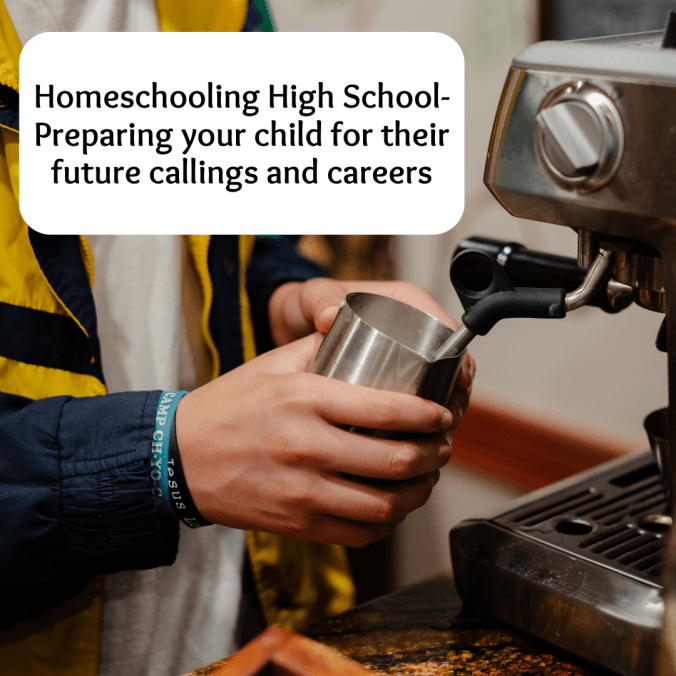
Homeschooling High School | Preparing Your Child For Their Future Callings and Careers

One of our focuses is having teens choose a major from a young age. We do this so they can focus on building the skills needed for their future careers and callings. Fun-Schooled teens who choose a major can graduate High School having already started their own business- or with an impressive portfolio to jump right into the work world. Last month, we talked about homeschooling college-bound teens. Today we will focus on homeschooling High School when your teen plans to enter the workforce after graduation.

Top Tips for Homeschooling High School

We said this last month, and it’s worth repeating today. Ensure you know the legal High School requirements for where you live. The HSLDA is an irreplaceable resource for understanding your local laws. Also, check out our comprehensive guide on assigning credits to journals.

If your student is not already actively selecting their school materials, now is the time to start. Let them select some, or all, of their journals and the resources they’ll use alongside them. It works well to offer 5-10 choices for your students to select from if they get overwhelmed by too many options. You can do this with journals and book selections.

Get help from your community as needed. This track focuses on the skills kids need to step into their future careers and calling. You may not know exactly what they need to know and that’s ok! Give your child a chance to interview a few people in their desired field to get answers. Shadowing and internships can provide valuable information and build skills.

It’s okay to repeat a journal completed at a younger age. Because students combine journals with academically appropriate materials, they will get a different experience. High Schoolers can go more in-depth than they did when they were younger. Plus, we know there will never be 100% retention on any subject of study. Repeating a journal will allow your student to get closer to mastery and pick up things they missed last time.

FAQs for Homeschooling High School

What if my student has no idea what they want to study?

Parents often tell us asking the question, “What is your future career or calling,” elicits a lot of “I don’t know” answers. It’s a huge question and can feel heavy for a lot of teens. We suggest asking “What do you want to do?” and “What do you want to know?” This can apply to things they want to do and know right now at this stage in life if needed. As they hone their skills, they’ll think through what they’d like to do later in life. Here are a few more tips for using these magic questions to jumpstart learning.

How do you select materials that are High School level appropriate?

Many Fun-Schooling families like to pursue Charlotte Mason-based book lists to select materials. Ambleside Online, Wildwood, Simply Charlotte Mason, and Sabbath Mood Science are popular options. From 7th grade up, these programs use High School and College level materials. Simply Charlotte Mason also has a great book finder that allows you to narrow down books by grade and search for a specific subject or keyword. You can also search “living books + (subject)” to find more.

Other families head to the library and ask librarians for help. If you do not live near a library, most libraries have a free option to chat with a librarian online and get suggestions- or you can call. They’ll be able to help you choose age-appropriate materials and provide lots of great suggestions.

You may also get support from your local public high school. Some public schools are more supportive than others of homeschoolers. We’ve heard of teachers being willing to sit down with homeschool families and offer suggestions for materials.

As mentioned above, interviewing someone in the student’s desired field is a wealth of information. They likely have books and resources they’ll lend your student- or can provide plenty of titles and websites.

What about learning gaps?

Don’t fear “gaps.” All students come into life with gaps; learning everything we are taught is impossible! Once they’re in the workforce, they are so well equipped to know how to learn that they’ll be perfectly capable of filling in any gaps. Students can take courses at a community college if there’s something specific they have to know for their future career or calling that they can’t teach themselves. Check out this post for a few other thoughts on gaps.

How does Fun-Schooling help a student prepare for their future career or calling?

We have written several blogs about this which I will reference below. The short answer is that Fun-Schooling lets students dive deep into their field of study. It teaches them how to learn and gain skills. Students are set up for success for a lifetime no matter what career path or calling they choose- or how many times they change their path throughout their lives. The skills they will develop at home will help them find success no matter what they hope to do one day.

How and Why to Choose a Major at a Young Age
Choosing a Major & Why 13 Is the Magic Number
Transitioning Toward Adult Life
Raising Employees?

What are the top journals for High School students to use?

Find out the most popular journals High Schoolers preparing for their careers and callings in this post


More tips for high school homeschoolers


About the Author- Amanda Osenga is a Fun-Schooling mom in Columbus, Ohio. She is also the social media manager and Virtual Assistant for Thinking Tree. Her family combines Thinking Tree books with the Charlotte Mason method using books from Ambleside Online and Wildwood Curriculum. In her free time, Amanda is an avid reader and loves to be outdoors.

Top Journals for High School Students

Fun-Schooling journals provide students with the skills they’ll need to be successful in their future careers and callings. Students get to dive deep into their desired field of study and enter the workforce after graduation with 4+ years of mastery behind them.

High Schoolers can use any of our journals. These featured journals we’ve created specifically to help teens dive into their careers and callings. Just because a journal isn’t featured here, doesn’t mean they can’t use it! And teens can repeat journals they completed at a younger age alongside different age-appropriate materials. We often have students who continue using Fun-Schooling journals as young adults to continue learning.

The Artist Fun-Schooling Journal Art majors of all abilities will be challenged by various art prompts and encouraged to explore their creative interests. Students will approach learning as a whole and cover math, reading, language arts, and more while studying art.

The Animal Lover’s Fun-Schooling Journal Designed for students majoring in animals. Great for students who are going into zoology, veterinary medicine, or another animal-based field.

The Athlete’s Fun-Schooling Journal Document learning in multiple school subjects while also exploring different sports. Covers traditional sports such as basketball and baseball and unique sports like breakdancing and kayaking.  Students will even learn about chess as a sport!

Camera Quest offers students the chance to do a deep dive into the world of photography. Students will learn techniques and get lots of practice.

Design a Dress Students majoring in fashion will get to design dozens of different dresses. Also popular for teens who are exploring modesty and their own sense of style.

The Baker’s Fun-Schooling Journal & The Chef’s Fun-Schooling Journal For students majoring in culinary arts, cooking, and homemaking. Also helpful for students to learn how to cook before they live on their own.

Guide to Birthwork A research guide for aspiring mothers, midwives, doulas, lactation consultants, childbirth educators, nurse-midwives, and OB-GYNs.

Life Skills Provides 36 essential skills to know before launching into adulthood. Includes fun hands-on activities and lots of practice opportunities.

High School Homeschooling Handbook allows students to cover all the major subjects in one journal. Students can select materials that fit in with their passions and future goals while completing this journal.

The Singer and the Songwriter journal and creativity journal Step-by-step exercises to inspire and improve your songwriting skills. As well as easy-to-follow steps through exercises and workouts designed to enhance your vocal skills.

The Songwriter’s Fun-Schooling Journal For songwriting and theater majors of all abilities.  While studying songwriting, students will approach learning as a whole and cover art, math, spelling, language arts, and more.

How to Make Money An interactive guide to uncovering passions, igniting ambition, and providing the practical tools needed to set and accomplish financial goals. Great for students to discover what they’d like to do in the future.

The Writer’s Fun-Schooling Journal Students majoring in writing or who will need writing for their future careers will love this journal. Includes writing prompts, character development, storyboards, oral practice, lyrics, tips, and more.

PEEK INSIDE these journals here

What other journals is your High School student using? Share in the comments to help other families!


Make sure to check out part 1-


More About Fun-Schooling High School


About the Author- Amanda Osenga is a Fun-Schooling mom in Columbus Ohio. She is also the social media manager and Virtual Assistant for Thinking Tree. Her family combines Thinking Tree books with the Charlotte Mason method using books from Ambleside Online and Wildwood Curriculum. In her free time, Amanda is an avid reader and loves to be outdoors.

Fun-Schooling with Food | November Journals On Sale Now!!!

This month, is all about food!!

Scroll to the bottom to find the sales!

Cooking, baking, and growing your own- we’re covering all things food journals this month.

Food Journals

We believe teaching children to cook is a crucial life skill. And in the Fun-Schooling community, we have lots of amazing chefs. It’s been our joy to create several food-based journals for your children to enjoy. The links below will take you to peek inside videos so you can see exactly what’s in these wonderful journals.

  • Adventures Around the World– Learn about culture, history, and yes- food- for over two dozen countries.
  • Garden Research Handbook– The essential guide for maintaining a thriving garden. This is one of our most in-depth research journals yet.
  • The Baker’s Fun-Schooling Journal– Perfect for students majoring in baking or who want to hone their skills a bit more.
  • The Chef’s Fun-Schooling Journal– A core journal for Chef’s of all ages and stages. This has become a popular Mom School journal too.
  • Smoothie Time– Math, Home Economics, Nutrition, and Smoothies!! Students will make over a dozen smoothies and gain skills to be more comfortable in the kitchen at the same time.
  • Wilderness Adventure Handbook– Students will learn about foraging for wild edibles and how to survive outdoors.
  • Yum-School– Make 15 different dessert recipes with visual instructions. Perfect for introducing students to cooking and honing skills in experienced cooks. Includes guides for adapting recipes based on allergies and dietary needs.

ON SALE

Paperbacks & E-Books – up to 30% off

PDFs – up to 50% off


What questions do you have about Fun-Schooling and cooking?

What resources are your students (or you) using alongside these journals?

Help other moms out and let us know in the comments.


Top Journals for College-Bound Homeschoolers

Are overwhelmed about how to prepare a homeschooler for college? Do you wonder if your homeschooler can get into college? Concerned about ensuring your college-bound homeschoolers will be successful in their courses? Today we’d like to offer a few suggestions to help bring peace of mind and set your homeschooler up for success in their next stage of life.

College-bound homeschoolers can use any of our journals. However, a few have found a particular niche/ families say they’ve been especially helpful in preparing their students for college. We even have students who continue using Fun-Schooling journals in college for notes, research, and journaling!

High School Homeschooling Handbook/ Just for Teen Guys High School Handbook contains almost 500 pages for your student to document learning in all the required subjects. Some students have even used this to show their prospective University during interviews.

All About Money– Economics & Business. This is especially important for college-bound homeschoolers pursuing a business or finance degree. Moms tell us it is usually enough to fulfill a High School economics credit. Use it alongside Whatever Happened to Penny Candy by Richard Maybury. Many families also like to use the Life of Fred Financial Choices book.

10/12 Subject Portfolio is an attractive and easy way to document learning in multiple subjects all in one place. Students have used this for college admissions meetings to show their work and edreading ucation. It’s also one of the most popular options for college students to be able to keep track of all their notes in one notebook.

How to Write Research Papers and Essays is an essential guide written by a college professor. It is a must for college-bound homeschoolers that they’ll reference again and again.

American History Timeline is a comprehensive journey through American history. This is one of our most in-depth journals. Students can use documentaries, podcasts, and books to meet the required hours for their high school credit. Many families like to pull books from Charlotte Mason-based booklists like Beautiful Feet Books and Ambleside Online to bring history to life.

Learn Any Foreign Language allows students to learn any language naturally and flexibly. Many Universities require a Foreign Language for admission. This is a journal students may want to bring with them to college as they continue their language learning.

Make Your Own Book of… we have about a dozen “make your own” journals. These are blank inside and the perfect place for students to take notes, make a portfolio, and document their learning. Students also like to bring these to college to take notes.

Master Class allows students to create their own portfolios as they work their way through online or in-person classes. We’ve had many Fun-Schoolers present these to college admissions counselors to display their work.

Picturing the Past is a Charlotte-Mason-based picture study journal of 75 historical paintings. Students use this as a guide for not only understanding art but also to gain a better foundation of history. It is especially great for college-bound homeschoolers looking to study history or the arts.

Pondering the Past exposes students to 30 works of Classical Literature. Some students use it as is for a general overview of the books. Others get more high school credits by reading some, or all, of the books. It’s also a popular journal to combine with Picturing the Past and the American History Timeline to build a more comprehensive picture of each historical era.

90-Day Homeschooling Planner allows your student to manage their school tasks, chores, appointments, and goals in one place. Help them build a habit of using this in High School, and they can continue using it in college.

Brain Games build skills in creative thinking, problem-solving, logic, reasoning, math, reading, spelling, and more. Plus, they’re a great way to relax and give your brain a break! College students also enjoy them as a nice reprieve after a busy day of classes.

Top 30 Grammar Mistakes dives into the most common Grammar mistakes and gives students plenty of practice using proper grammar rules. Even if your child completed this in a younger grade, repeating it to pick up rules that didn’t “stick” is a great idea. Many families like to combine the Life of Fred Grammar books to fulfill one (or more) credits- and they can often test out of intro-level college grammar with these books + this journal.

Spelling Time: Top 150 Misspelled Words helps students learn the most often misspelled words in a fun and engaging way. This is another journal worth repeating more than once to ensure each word is properly learned.

Viking Vocabulary is our most advanced Language Arts journal. We specifically wrote it as a college-prep journal. Students will learn tools invaluable to them in their college education. They’ll also build a stronger vocabulary and have fun learning about Vikings. Use alongside the Viking section in American History Timeline to do a deep-dive into all things Vikings!

Pocket Core Journals- These are 60-Day core journals that cover all the basic subjects in a smaller size. Students love these for on-the-go learning. Two cover options, boats and birds. They are also popular with students who have learning or physical disabilities or other learning challenges as they have much less writing space on each page.

What other journals are you having your college-bound homeschoolers use? Share in the comments to help other families!


Make sure to check out part 1- Is Fun-Schooling Enough for Students to Go from Homeschool to College?


More About Fun-Schooling High School


About the Author- Amanda Osenga is a Fun-Schooling mom in Columbus Ohio. She is also the social media manager and Virtual Assistant for Thinking Tree. Her family combines Thinking Tree books with the Charlotte Mason method using books from Ambleside Online and Wildwood Curriculum. In her free time, Amanda is an avid reader and loves to be outdoors.