When it comes to parenting, you never quite know what challenges you’ll face. For me, one of the biggest surprises came in the form of dyslexia. My oldest daughter, Anna, is the first one that we discovered is dyslexic, and it’s really an amazing story!
My first son, Isaac, was a natural when it came to letters and reading. He was already reading by age five, so I figured I’d use the same approach with Anna. But Anna was different – a free spirit who could never sit still. At four, she showed zero interest in reading, so I decided to step back and let her explore her own interests, like drawing and nature.
By the time Anna turned six, I felt it was time to focus on helping her learn to read – but it quickly became apparent that something wasn’t clicking. Phonics made no sense to her. She would get upset, she would get angry, she would cry. She would get one word correct one day, and then, the next day, she’d forget it. We tried again when she was seven, even bringing in a teacher, but the struggle continued.
As Anna approached eight and still couldn’t read, I started to worry. With five or six children at that point, my in-laws began suggesting that I might be too busy with the younger ones to teach her properly. It was heartbreaking when, at nine years old, Anna told me she didn’t care about learning to read because it was too hard for her to differentiate between letters. She declared she’d just be an artist and a mom instead.
I remember sitting there, stunned by her words. After a moment of reflection, I gently told her, “Anna, God wouldn’t have given us the Bible unless he was going to give us the ability to be able to read it.” It was then that I realized we needed a different approach. Anna was a real problem-solver, so I decided to try and outsmart her reluctance to read by creating something that turned reading into a problem-solving challenge.
Click here to find out what Sarah did next (and access some free resources)!
Selecting materials for homeschooling a child with Dyslexia doesn’t have to be hard. We have over 300 journals written with a Dyslexia-friendly font. Your student can study all the required subjects and anything else they’re interested in.
While all of our journals are Dyslexia-friendly, we’ve found a few that are especially popular for Dyslexic kids- and adults.
Dyslexia Games
This is our most popular option for Dyslexia. It’s even used in schools and therapy centers. Not only does it help with symptoms of Dyslexia, it also helps with math, spelling, handwriting, logic, creative thinking skills, and more. Students may sometimes need to repeat a series, this is ok!
We offer three series-
Dyslexia Games Series A
Designed for use by new and struggling readers. Ages 5-8 is the most common age this series is used. Is Series A for my child? Can your child consistently read three letter words? If not, Series A is the place to start, otherwise go for Series B to start.
Dyslexia Games Series B
For students who have foundational reading skills and struggle with grade-level reading/writing/spelling.
Is Series B for my child?
Can your child consistently read three letter words? If so, Series B is where to start, otherwise, begin with Series A. *After completing Series B, the student should no longer have reading confusion and will be ready for any normal curriculum or Series C. *Students over 9 years old with serious spelling problems, should complete both Series B & C, but will not need Series A.
Dyslexia Games Series C
Students, and adults, who have problems with spelling, reading, writing, or math.
Is Series C best for my child?
Most dyslexic students over twelve years old can start with Series C and do not need to use Series A or B first. Some profoundly dyslexic 12+ year olds, may need to start at series C.
Dyslexia-Friendly Homeschool Curriculum Bundles
We have worked hard to carefully cultivate nine different curriculum bundles for homeschooled Dyslexic students. These contain everything your student needs for an entire year, including Dyslexia Games and suggested lesson plans.
While these each have a suggested grade, students can go up or down a couple of grades with no problems. If they see a bundle that delights their interest more and it’s not their “grade,” that’s fine. Make sure they’re getting the correct level of Dyslexia Games.
All of the journals in these bundles are also available individually via Amazon and most are available a PDFs on our website.
Buy One Get one FREE Dyslexia Games until October 12th with code B1G1MC&DG2023 OR 25% off with code DyslexiaMonth2023 until October 31st at https://www.funschooling.com/dyslexia-games
Disclaimer- The content of this post is for informational purposes only and is not intended to diagnose, treat, cure, or prevent any condition or disease. Please seek advice from your healthcare provider for your personal health concerns prior to making any changes for yourself or your child.
About the Author- Amanda Osenga is a Fun-Schooling mom in Columbus Ohio. She is also the social media manager and Virtual Assistant for Thinking Tree. Her family combines Thinking Tree books with the Charlotte Mason method using books from Ambleside Online and Wildwood Curriculum. In her free time, Amanda is an avid reader and loves to be outdoors.
Homeschooling has grown by leaps and bounds the last few years. In fact, some areas have seen an increase of more than 400% since 2019. Students with learning challenges, disabilities, and special needs make up a significant portion of this growth. Families realizing during the pandemic how much better their kids did at home, and decided to keep them there. Homeschooling a child with Dyslexia is by far the top learning disability we help families with. Fortunately, there are plenty of resources available to help Dyslexic students.
What is Dyslexia?
Dyslexia is a learning disability impacting the ability to read. Students struggle to process letters and the sounds associated with letters. The most well-known manifestation is the inability to distinguish the difference between d/p/b/q. Children with Dyslexia may also describe letters on the page as “wiggly” or “moving.” Struggles with spelling, rhyming, letter names, phonics, and letter position are also common.
It is estimated 10-20% of people have Dyslexia. Other learning disabilities or challenges such as ADD/AHD are often present as well. Genetics also plays a part as it seems to run strongly in families. Proper diagnosis and identification has been increasing in the last decade. Most children are diagnosed between 2nd-3rd grade unless they are profoundly dyslexic.
Adaptations and tips for Homeschooling a Child With Dyslexia
While it cannot be “cured,” homeschooling a child with Dyslexia gives you a unique opportunity to teach your child how to learn in spite of their challenges. In many cases, students no longer have symptoms of Dyslexia after they have homeschooled for a while- especially when they complete Dyslexia Games.
Dyslexia Games is always our recommended “first stop.” This is the Dyslexia therapy program that started our company! You can read more about the creation of Dyslexia Games here. We have had thousands of students and adults complete this program and either reduce or eliminate their symptoms. The Dyslexic brain is strongly right-brained. When we can tap into that art-based mind, students are able to learn more efficiently. You’ll find art incorporated in everything we make because it has so many benefits for all kids!
Provide plenty of breaks, processing time, and rest. Your student has to work extra hard to process the words on the page in front of them. This can lead to fatigue and overwhelm. Families have found it to be helpful to give students a break in between reading/writing tasks and to vary activities.
Audiobooks can be a lifesaver- both for Mom and kids. They can serve a couple purposes. One, to help your child take in information without needing to look at words on a page. Two, to give your student a chance to listen while they follow along in a book. Families homeschooling a child with Dyslexia usually utilize audiobooks for both purposes depending on age, severity of dyslexia, and season of life. Librivox is a popular option for free audiobooks, as well as your local library.
Utilize a “cut out.” This involves taking a piece of paper- heavier cardstock works best- and cutting a “window” in it. Providing this “window” helps reduce the amount of visual stimulation on the page. Start out with a smaller window. They will move this along as they read/complete their work. You can gradually increase the size of the window over time until they no longer need it.
View it as a gift! Can it be frustrating? Yes. And your child sees the world unlike other children- this is a gift. Most dyslexic children are extremely creative, artistic, and passionate. If you help them to view it as a gift rather than a hindrance, you’ll open up the world for them.
Building a Learning Plan/ Curriculum for Dyslexia
If your student was in public or private school for a while, you may want to start with a period of de-schooling. Children with learning disabilities and special needs often have trauma and/or bad experiences in school. The de-schooling period allows them to reset their nervous systems a bit and recognize things will be different.
We suggest letting Dyslexic students do a deep dive into their interests while completing Dyslexia Games. As mentioned above, these are extremely creative kids with big ideas. If they are allowed to study their interests, they’ll blow you away! Plus, they’re more motivated to learn when they are studying something they’re interested in. You can use one of our core journals to cover all the required academic subjects while diving into their interests.
It’s often best to start out slow and build from there. Some Dyslexic students thrive with variety in their materials, while others shut down. Start out with one or two journals and 4-6 books to use alongside them. At least one of the books could be an audiobook they just get to listen to. Another book could be an audiobook they follow-along with. Only add more as your child expresses interest/desire for more.
Make good use of Dyslexia-Friendly fonts in your homeschool materials. All of our journals use the Dyslexie font for easier reading. You can also find books and e-readers with this, or a similar font, available.
Don’t forget to stagger activities throughout your homeschool day. For example, squeeze in a 5-minute movement break in between language arts and history. Many families like to start with Dyslexia Games and then listen to an audiobook. Try to avoid having reading or writing tasks back-to-back, let them color a picture or do math or science in between.
Homeschooling a child with Dyslexia will open your child up to a whole new world. There is lots of support out there for you and your child. Check out our private Facebook group, Homeschooling Kids with Dyslexia, Dyscalculia, and ADHD to connect with other families and get more tips.
Wondering about the top journals for kids with Dyslexia? Check out this post to find out & learn more about Dyslexia Games
COUPON CODE
Buy One Get one FREE Dyslexia Games until October 12th with code B1G1MC&DG2023 OR 25% off with code DyslexiaMonth2023 until October 31st at https://www.funschooling.com/dyslexia-games
Learn more about Homeschooling a child with Dyslexia
Remember– This series is based on the average child with this learning challenge. We recognize most of these have a huge range of expression. This is intended to be a supportive overview. The bell curve is extremely important to remember throughout this series. Some children will fall outside of this average. We’ve chosen to homeschool for a reason- so we can customize our children’s education to their unique academic level and needs This is especially important for children with special needs, medical concerns, and learning disabilities.
Disclaimer- The content of this post is for informational purposes only and is not intended to diagnose, treat, cure, or prevent any condition or disease. Please seek advice from your healthcare provider for your personal health concerns prior to making any changes for yourself or your child.
About the Author- Amanda Osenga is a Fun-Schooling mom in Columbus, Ohio. She is also the social media manager and Virtual Assistant for Thinking Tree. Her family combines Thinking Tree books with the Charlotte Mason method using books from Ambleside Online and Wildwood Curriculum. In her free time, Amanda is an avid reader and loves to be outdoors.
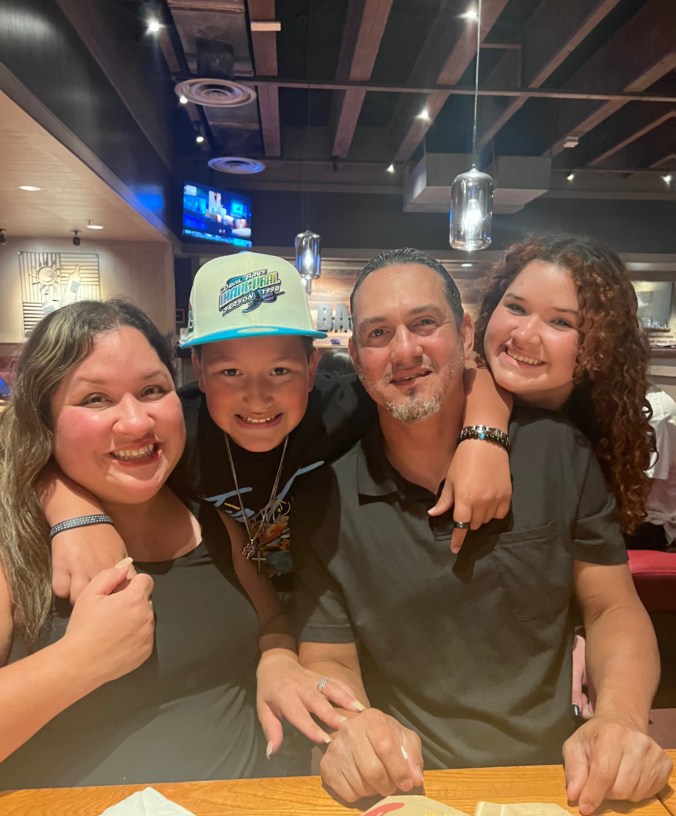
Name(s): Ten-year-old Rodrigo Astor – parents, Yessenia and Andy, and sister, Ciara
Location: Dundee, FL
Challenge(s): Rodrigo struggled in school due to dyslexia, dyscalculia, dysgraphia, ADHD, and unspecified anxiety disorder.
How they discovered Thinking Tree Books: Yessenia searched “dyslexia curriculum” online.
Favorite Thinking Tree workbooks:Dyslexia Games, Series A, Book 2 (where Rodrigo experienced his first big breakthrough) and Book 6 (where Rodrigo is becoming a more independent reader).
“I’m really happy,” Rodrigo says. “I think Fun-Schooling is fun. One day we met Sarah Janisse Brown at a Barnes and Noble. She was so nice to me. She saw the work I was doing and said I was doing a good job. Sarah told me I was going to start reading in 3 months and I started reading. The first book I read all by myself, I told my mom, ‘I’ll do the easy words, you do the hard ones.’ I READ IT ALL BY MYSELF! My mom says I can do all things through Christ who strengthens me, and I believe.”
“Rod, you’re reading!” Yessenia exclaimed, and the tears began to flow.
Rodrigo gasped. He had read without mom’s help. “I can read!” he cried. “Sarah said I would be able to read!”
Most parents cheer the first time their child reads without help, but for Yessenia, this moment was a long time coming, and for Rodrigo, it was a major win.
A Rough Start
Rodrigo spent his first month of life in and out of the hospital. He experienced complications at birth, and at 20 days old, doctors gave him only 48 hours to live.
Fortunately, Rodrigo beat those odds, but he was diagnosed with Hirschprung’s disease, a congenital disability in which nerves are missing from the intestine. Rodrigo underwent several biopsies, and at 30 days old, had a colostomy.
Later, his appendix ruptured, requiring more hospital time.
As a result of Rodrigo’s rough start, he suffered many developmental delays, including digestion and elimination issues and speech and language problems.
Choppy Waters Ahead
The early years were filled with doctors’ appointments. Yet Rodrigo was able to start preschool in a mainstream classroom with an IEP (individualized education plan). However, the teachers were not able to give him the time and attention he needed, and he started to backslide.
Kindergarten and first grade brought similar challenges. Rodrigo and his mom spent several hours daily on homework. Yessenia was concerned Rodrigo might have dyslexia. Teachers reassured her that many children struggle at his age and he’d hit his stride.
Rodrigo is STRONG, but he was reaching his breaking point.
“Mom, I’m frustrated! I can’t do this,” he cried. “My friends read. My friends are fast. I can’t. I don’t have time to play. I don’t have time to watch TV. I don’t have time to do anything.”
Yessenia’s heart broke for her hard-working son. She hugged him and assured him that he didn’t need to compare himself to his friends.
Then she had the idea to ask him what he saw while he was trying to read.
“The words are jumping. They just keep moving,” he replied.
She reached out to school psychologist Gretchen Cabranes, who had been involved in Rodrigo’s IEP, to help navigate a new path. They researched homeschooling and how to transition in a way that would best support his needs.
Covid’s Silver Lining
Then Covid hit and suddenly everyone was homeschooling, including the Astors. Yessenia worked with Rodrigo throughout the day, and at last they had their evenings back.
When local schools reopened for in-person instruction, they were given a virtual option, which Yessenia gladly embraced. But school took all their time, and Rodrigo didn’t have time for a childhood.
Neurologist Dr. Avi Domintz-Gebet referred him for a neuropsychological evaluation at Bay Area Neuropsychology in Tampa. Rodrigo was diagnosed with ADHD-combined type, dyslexia, dyscalculia, dysgraphia, and unspecified anxiety disorder. Finally, they had diagnoses to work with.
Yessenia and Gretchen Cabranes found many homeschooling resources they liked. They zeroed in on Dyslexia Gamesfrom Thinking Tree Books, created by Sarah Janisse Brown for her dyslexic daughter.
The Final Straw
Meanwhile, virtual school included daily meetings with Rodrigo’s teacher and classmates. When the teacher called on Rodrigo and he didn’t answer right away, she called on another student to help. He motioned to his mom to come turn the camera off, and then he burst into tears.
“I knew the answer!” he cried. “I just needed more time.”
Yessenia comforted Rodrigo, but in her heart, she was done. “That’s it,” she said to herself, “it’s time.” She began withdrawing Rodrigo from school and purchased Dyslexia Gamesto start their homeschooling journey.
“It was scary,” she says, “but deep down, I had confidence it would work. It worked for Sarah’s daughter, and I knew it would work for Rodrigo too.”
Her husband wasn’t so sure. He was born and raised in Puerto Rico and hadn’t heard of homeschooling. “Kids need to be in school,” he said. “They need socialization.”
Smooth Sailing at Last
Yessenia reassured her husband and plowed ahead. She loved the feeling she no longer had to rush, and Rodrigo loved Dyslexia Games. Peace filled their hearts and home.
When Sarah Janisse Brown was in Florida, she met with the Astors. Rodrigo was so excited to meet Sarah and tell her what he loved about her books. There was only one thing . . .
“I can’t read,” he confessed.
“Well, Rodrigo,” she replied, “I give you three months, and you will be able to read this note that I’m going to write for you.” She also gifted him the next level of Dyslexia Games.
Buoyed by Sarah’s encouragement and generosity, he continued to work hard. He surprised himself when he read without help for the first time. And then he remembered Sarah’s note. He was able to read that too!
Encouragement left in the back of Rodrigo’s Dyslexia Games journal for when he could read it himself one day!
A Day in the Life
These days, Rod does a few pages each day in his various Thinking Tree Books – Dyslexia Games, Brain Games,Math Craft, and a couple of Fun-Schooling journals. He also watches educational videos, and he loves to go to the library and get books.
Rodrigo is 5’3” at ten years old, “But, he feels even bigger,” Yessenia chuckles. “He’s so proud to tell everyone he meets that he can read.”
Big sister Ciara is happy to see that both her mom and Rodrigo are less stressed. “I see a difference in him, I mean he even read over me once,” she says. “He read my text messages. I couldn’t believe him. I was like ROD, OH NO!”
He’s good with numbers too. Recently, he offered to help Ciara with her calculus homework. “I’m slow, but I’m good!” he says.
Rodrigo’s dad Andy doesn’t worry as much as he used to. He’s seen Rodrigo is less stressed and has improved in his expressions and focus. He was impressed when Rodrigo helped him fix something he was working on. He sees many families homeschooling nowadays. “I say to myself, ‘this is good,’” he smiles.
Finally, Rodrigo has time to do fun things–like horseback riding, participating on a swim team with his sister, playing baseball, playing drums, connecting with other kids in his Funschooling Co-op, and taking lots of field trips. He gets more socialization now than when he was in public school.
Yessenia’s Tips for Parents
“Believe in yourself and your child. My faith is huge. God gave us the abilities and tools we need to teach our children.”
“Do the research. Dig in and don’t be afraid. Find something that works for you. For us, it was Dyslexia Games.”
“Ask for help. There was someone in your place before, and if not, you will be that person for someone else.”
COUPON CODE
Buy One Get one FREE Dyslexia Games until October 12th with code B1G1MC&DG2023 OR 25% off with code DyslexiaMonth2023 until October 31st at https://www.funschooling.com/dyslexia-games