Dyslexia Games and the Fight Against Brain Fog (Part 2)

(Guest post by Ferne Hood)

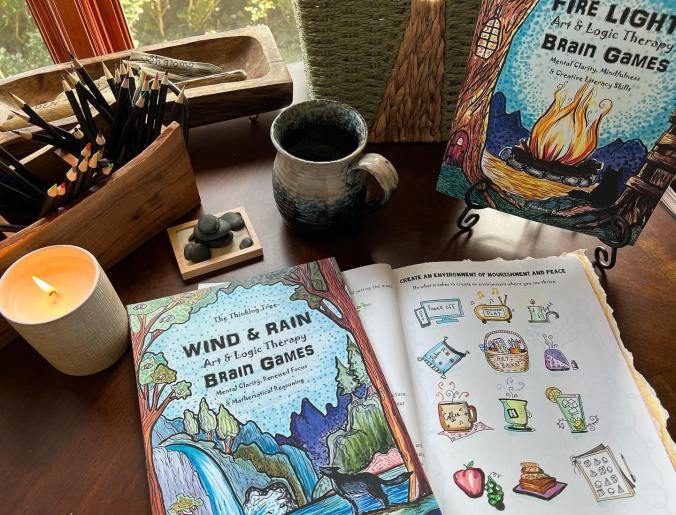
The final week of the first month of the trial saw more and more positive and unexpected outcomes. Moms were feeling less overwhelmed, more organized, more in control, more creative and even remembering where they left their phone and what that person’s name was who they just met! One mom said, “It has been helping me remember things, like names. I’ve been getting increasingly worse at remembering names for the past couple years. I’ve surprised myself a few times lately!”

            At the end of the first month of the trial, Sarah conducted a little poll to see what areas of people’s lives were improving the most as a result. There were an astounding eighteen areas nominated! The area with the most votes being focus, shortly followed by organization, cleaning more and feeling less scatterbrained. Brain fog reduction was fifth on the list, which shows that these other fantastic areas of improvement were wonderfully unexpected by-products of the experiment. Moms reported an increase in concentration, patience, mood and memory. Some moms also discovered that they had some wonderful hidden artistic skills and their creativity was allowed to come to the surface once again. They found themselves bonding with their kids more and making precious time for themselves, sometimes for the first time in a long time. A month of Dyslexia Games also seemed to be helping to calm anxiety and improve mental health, as well as inspire moms to cook and clean more and finish the jobs they start.

            Because of Dyslexia Games, many moms are now feeling more in control of their lives, while also finding new ways to spend time with their kids, reconnecting over puzzles and pictures. Sarah has since created a range of Mom Brain Games specific for this purpose, to help mothers everywhere reclaim their lives, harness their thoughts, own their day-to-day and even clean a garage or two.

            “I felt exhausted, depressed, frustrated and nothing seemed to get accomplished. By the time I was halfway through the first book in this series I had retrained my brain to completely focus and complete one small task at a time. Now, I am able to get things accomplished. My anxiety and depression is no longer an issue. I am not overwhelmed–I can look at things and break it down into small chunks that are doable… This would not have happened without doing these brain fog series. I don’t know how it works but I am proof it does work !!!” – Krista.

            So many moms who have done this trial have had such fantastic results and are now a part of an ever-growing community. They have found a way to find themselves again, with a little daily focus, some time and dedication, some pretty pens, and maybe a green lemonade or two along the way.  

(Read Part 1 by clicking here)

Sarah Janisse Brown - Morning Light
Sarah Janisse Brown, Creator of Dyslexia Games/Art & Logic Therapy

Dyslexia Games and the Fight Against Brain Fog (Part 1)

(Guest post by Ferne Hood)

When Sarah Janisse Brown’s daughter Anna was struggling with dyslexia and finding it hard to read, Sarah began creating patterns and pictures in sequences and doing these “games” with Anna again and again! The result was incredible as Anna soon began to read comics and recipes, and then moved on to novels and the Bible. Anna didn’t realize she was actually learning to read when she was doing these puzzles with her mom, she just thought she was having fun. But her success led to Sarah creating a series of workbooks containing her Brain puzzles called Dyslexia Games, to help countless other kids and their parents who were having the same struggles.

            As some moms began going through the games with their children, and inadvertently doing them themselves, they soon realized that the games were having a significant impact on them too. It seemed as though the Dyslexia Games were helping these moms in their struggle with brain fog! So Sarah decided to conduct a little experiment. She launched a Facebook group and asked moms struggling with brain fog to commit to intentionally using Dyslexia Games to see if they could improve their brain function. Around 800 moms committed to the trial, keeping notes of their progress along the way. And the results have been astounding. Not only have these moms discovered a passion (or aversion!) to designing t-shirts and drinking green lemonade, and maybe a newly formed addiction to stationary, but they are happier, more focused, more present and feeling less scatterbrained as a result of committing to doing just a few pages a day.

            In the first week alone, participants were already starting to notice a difference. Melanie said, “I definitely noticed a clearer mind and was able to get more done each day. Doing two pages each day has opened a desire up in me to be more creative and to take up doing art with my daughter!” And Janice said, “I look forward to it every day! My brain feels good and likes working on the puzzles. Afterwards I feel more focused and refreshed.”

            Even after just a handful of days, the positive affect of Dyslexia Games was noticeable. Many moms mentioned how it was even helping to ease their anxiety. Elina commented, “I have had way less anxiety since I started the brain games. I’ve been more motivated and have come up with many new solutions for problems I’ve had for a while.” And Michelle said, “I got the best sleep last night that I have had in a pretty long time. I have also found that I’m less anxious if I do these. I am prone to panic attacks and have found that if I feel anxious and I focus on doing these I don’t do my regular nervous habits and the feeling doesn’t escalate at all. It is a fabulous coping tool for me!”

            An easing in anxiety, increase in creativity and focus, and more bonding with their children – it seemed like week 1 was impacting for so many moms. (click here to continue reading)

Fun-Schooling/Thinking Tree Books Master List & Flip-Thru Videos!

Have you wished for a comprehensive list of all the books available for Fun-Schooling? Amanda Osenga and Alene Candy have applied their amazing organizational talents to compiling that info all in one spot for you! Click right here to access the spreadsheet! It’s a beautiful thing! Don’t know what to pick? Click here for some great help!

Also, for lots of flip-thru videos that let you see inside many of our beautiful journals, go on over to Linda Beltran’s YouTube channel, Homeschooling6! You’ll be glad you did! Here is a sample of the new, gorgeous 3-journal Art & Logic Therapy Mom-Schooling series. Come join other homeschooling moms in this Facebook group, who are in a quest for relaxation and mental clarity!

Sarah’s Mom Tips: Strategies for Different Learning Styles

Recently a mom asked this question:

How should I handle a child who doesn’t put forth much effort on the Fun-Schooling pages?

The truth is, he was just hacking his homeschooling and doing the minimum, which is what kids do when they want to move on to doing something they feel is more important. The problem is that kids all have a different learning style. We make Fun-Schooling journals for all the different styles. Let’s start off by talking about these, and what I call the Five Learning Languages.

There are some kids who are Creators. The kids who are Creators learn everything for one purpose: to create something. All their education has to revolve around creativity. That’s what they are motivated by. These kids will not do normal workbooks. They need things that are open-ended, that revolve around their passions and interests.

Then you have the kids who are Detectives, who get really deep into the one thing they are passionate about. They love research and are not interested in anything that you want to teach them. They are only interested in what they want to learn. They are very difficult to give a standard education to because they aren’t going to remember anything or make any effort to retain anything that doesn’t revolve around their interests.

Then we have the kids who are Explorers. These kids will not sit still. They can’t. They want to be going from place to place. They can give maybe 5-15 minutes of focused attention to some sort of lesson, or activity and then they need to switch. They won’t sit at a desk, doing workbooks, textbooks, or even online school that makes them sit for very long. I developed a lot of materials for this kind of kid. We call them the “active kids”.

Then, the next kind of learner is the Friend Learner. These are kids who are motivated to learn through social experiences. They do not want to sit by themselves and do anything. They want to be with somebody collaborating, bonding, talking, or doing a project or reading with someone. If you ask this kind of kid to do something alone, they are going to get bored and distracted and wander off to find somebody to play with. Sometimes pets help.

Finally, we have the classic students, the little scholars, and we call them the Followers because these kids just want to please the teacher, the boss, the authority, the leader, the parent. They will do everything you ask them to do really well, step by step. They don’t put their heart into it for the sake of learning, but more for the sake of making somebody proud. They really like grades and scores and tests and multiple choice and ways to just prove that they are good at something and worthy. They are really good at “in the box” type of schooling, but a lot of times they don’t tap into their own creativity and curiosity. (click Page 2 to continue reading)

Fun-Schooling Jitters? Jump in the Deep End!

When you first started Fun-Schooling with Thinking Tree Books you were probably feeling kind of overwhelmed with all the options to choose from, not sure how to build a curriculum for your child. You just look at all these beautiful books and wonder what’s inside and wonder…

Will my child be able to embrace this style of learning?

Is it enough?

Is it okay for children to have fun and study what they love instead of staying on the “tried and true” educational path set years ago my the experts of yesteryear?

Is it really okay that they are not learning all the sames things the grandparents studied in the 1950’s?

Can Fun-Schooling really provide a well rounded education when the whole point is for the child to dig deep into their specific passions and interests?

So many questions, fears, worries all mixed with the joy and wonder of discovering a way of learning that makes total sense!

So you dip in your toes, and maybe your child just gets it and is already diving into the deep end.

Or maybe you get it because you read Brave Learner and Unschooling Rules and The Unhurried Homeschooler and it all is the perfect fit for the homeschooling plan of your dreams… But your child has been so scarred by  “kill and drill” learning methods that they resist EVERYTHING.

Or maybe you were so relaxed in the past, and gave your soul over to radical Unschooling, and now your child scoffs at your efforts to get more organized with Fun-Schooling… because they would rather play Fortnight, and doesn’t that matter anymore? They fuss and cry at ALL structure.

So we plan, we dream, we fight, we cry, and we let go, and then we hold on tight because that’s motherhood.

And all you know is that trying to be a teacher is no fun, because your child actually can not sit still, and you know in your heart your child was not created to sit still. Children need to be free within safe boundaries, to learn when curiosity sparks, to discover who they are, what love is, and to learn to think deeply, live passionately, to grow through the growing pains and to learn to navigate this Earth, with wisdom.

And so you balance freedom with responsibility.

You measure out the boundaries of purpose and pleasure.

You walk the path ever-changing, never knowing where this road will lead… because it’s full of wonder, and questions, and struggle, and newness, and growth. And just when you think you mastered the game, the rules change, the seasons change, the relationships change, and life happens…

And it’s oh so messy.

And you wonder how you could ever prepare a child for the unknown future of a changing world.

You study the child. You seek to understand their individual gifts, weaknesses, passions and learning styles. You adapt your strategy to their personality and everything keeps changing. And then they are gone.

Go ahead and cry, because this is every mother’s journey, and even more so when you take on the great responsibility of giving your child an education that was dreamed up, just for them. (to continue reading, click on Page 2 below)

Fun-Schooling Themes for 2022

In the Fun-Schooling with Thinking Tree Books-Mom’s Support Group, we have a theme for every month, complete with contests, projects, and giveaways! Come join over 26,000 moms and mentors! Here are our themes: