Our Littlest Fun-Schoolers

Who has a PRESCHOOLER or Kindergartner?

Let’s rethink early childhood education…

If you are home schooling a little one, ages 3 to 6, it should be all about the fun!

It’s time to play. It’s time to build. It’s time to imagine. It’s time to learn how to work together on projects that both parent and child love.

If your child is not enjoying their preschool and kindergarten experience, something is wrong. Don’t be afraid to step back relax and just enjoy your child.

They won’t be a little forever. Why push them into academics that they’re not ready for?

Here at the Thinking Tree we believe that little children are created to play. They learn almost everything they need to know through playing. They learn everything else by watching you.

So should you even use workbooks? Maybe! If they see the older people in the family enjoying books they will be excited to get some of their own!

We have a few workbooks that were created especially for ages 3 to 6. We have a few favorites on sale now for $5 to $10 each.
When you use a Fun-Schooling journal with your little child be sure to be willing to collaborate with the child on each page. Ask questions. Help answer the questions that they come up with. Color together. Write together.

Speaking of writing… If you want your little child to learn to write well they must watch an adult write, so write down their stories on the creative writing pages in the Fun-Schooling books, as they watch.

If one of the pages has a lesson that’s too hard for your child then show them how it’s done. If your child seems resistant to doing the schoolwork, you could either set it aside for a later time or say: “That looks like fun can I do that page?”

Homeschooling should never make your child cry. Learning should be fun. Early childhood education should be driven by curiosity and wonder. As children grow, you can add more difficult lessons to the curriculum, but learning should always bring joy.
If the curriculum that you’re using with your child is making them miserable, change it! If a curriculum is too much work for mom, there’s no shame in tossing it out. Throw away the curriculum that isn’t working. There are so many wonderful options available to you!

It’s OK to experiment with different learning styles.

It’s great to try out different curriculum.

But don’t homeschool through guilt! Just because you spent a lot of money on it that doesn’t mean you should stick with it.
Your child is worth the effort that it takes to fight for an education that’s going to bring the joy. The goal is to provide an education that will be relevant and delightful.

An excellent education is one they look forward to experiencing every morning when they wake up.

And remember just because you are a homeschooler your life does not need to revolve around schooling.

Don’t forget to just be mom!

Take time to play with your kids, read to your kids, have fun with your kids! Go on adventures and let learning happen in the midst of life.

Kids grow up fast so don’t miss this opportunity to treasure each moment with your little ones and enjoy life to the fullest.

To get your family started with Fun-Schooling we have marked down dozens of books to $5 – $10 each! We want you to get your Fun-Schooling curriculum at such a low price that you won’t feel guilty setting it aside if it doesn’t work. Though we have seen the results. Kids love Fun-Schooling. Moms and dads love the peace it brings into the home, because the fight to get kids to focus on learning is over.

Here’s the list of deals: https://funschoolingwithsarah.com/2023/02/07/updated-sales-and-discounts-with-a-dozen-new-books-added/

What If Middle School Looked Like This?

Middle school is often associated with misery, drama, bullying, confusion and stress. It’s not a lot of fun. What if we were to rethink middle school?

Instead of pushing our kids into an educational mold that feels boring and irrelevant to them we could give them each a custom learning plan! What if we were to let our middle schoolers choose what they want to learn about?

Thinking Tree Books give your children the freedom, tools and opportunity to explore different career goals, dreams, hobbies, and business ideas!

If you have a child between the ages of 10 and 14, you might want to consider rethinking your goals for their education try giving them a customized education based on their personality and their passions. Middle school doesn’t have to be miserable. When we choose to homeschool our middle school kids, we help them to avoid a lot of the problems faced by kids at this sensitive age but take it one step farther don’t just homeschool… Fun-School!

To make it easier for your family to make the transition to Fun-Schooling we’re having a giant sale! All the books in this picture gonna be hot on sale for over 50% off. Imagine an entire year of homeschooling curriculum for less than $100 today were offering most of these books for $5, $10 or $15 each.

Check out all the books that are on sale right now for sale in February 14 here at this blog post.

When Your Children Love the Sea…

When you visit the ocean you can try to understand your place in a bigger story.

The waves keep rolling in, washing away my footprints. The sun rises higher, like it does every day. The tide comes in as usual. The heat rises and falls. The shadows lengthen and shrink.

Are your kids in love with the ocean? You’re in luck! Look at all these beautiful books you can choose from!

See a flip through of our All About Oceans Marine Biology Handbook here:

Sarah’s Mom Tips: Reluctant Writers

Don’t worry about having children write before they are ready. The Thinking Tree spelling books are really good for children who are not ready for writing, they color the words and write the specific words and they also do a lot of drawing. As the books advance some of them give the child an opportunity to do creative writing. If your child is not ready for the writing the BEST BEST BEST thing to do is ask the child what YOU should write for him. When the child sees you writing it stirs something up in their minds and they begin to develop the ability and desire to write.

If I am writing a story for my child (think 3 sentences) and I arrive at a word that I know that they know, I would say, “How do you spell cat?” They giggle and are happy to tell me how to spell. Next I will stop writing when I get to a word that they can write, and just say “Your turn!” and hand them the pencil so they can add a simple word. One nice thing about this method is that the child will try to mimic your letter size and style. Another fun way to get a child writing is to have the child DRAW a small picture of the nouns in the sentence.

If you do get to a place in any of the Thinking Tree Spelling books Or Dyslexia Games where the exercise is too advanced (for example the spaghetti lady causes dread) I would be an example and say, “You don’t want to do the spaghetti lady? That’s GREAT because I WANTED to do that one! Can I PLEASE do your spaghetti lady?”

This advice may go against everything you have learned from being in school yourself. If your child complains that something is too hard or too boring – DARE to do it yourself. Say, “Oh really? Can I give it a try? It looks interesting to me!” But if it is super boring, agree with the child, give it a try, and have fun. It’s okay to say, “You are right this is SOOOO boring. Let’s have a snack, and turn on some music! Don’t you think that music will make this more fun?” Now, if the schoolwork is totally irrelevant, and you are unwilling to do that kind of work yourself, maybe you should pitch it. I know we worry about the money we spent on nice curriculum – so put it on the shelf and tell your children they can use those books to “play school” with their friends or stuffed animals. If you are trying to FLIP to FUN-Schooling and spent all you had on something boring, and it’s not in your budget to buy a homeschooling journal – let me know. I can help you with a PDF version of a journal.

When I was a kid in 1st to 5th grade I HATED spelling tests. I got Ds and Fs on my report card in Spelling. No one knew it was dyslexia. I could not memorize; but when I would take a spelling test I would forever remember the spelling that I came up with on the test – WRONG or RIGHT. I was so emotional while being tested that the negative feelings burned the misspelled word into my brain. I would have 45% correct on the test, and the teachers NEVER worked with me to correct the mistakes. That is why I now create spelling books that work for visual thinkers. I would advise you not to give spelling tests to a dyslexic child. Just look at their creative writing projects when they are 11 years old – and take notes of all the words that they need to learn. If they write, color, trace and say the letters WITH the correct spelling SEVEN times they will remember the correct spelling…by the time they are 14 years old. Most spelling problems do self-correct by age 14 if the child does a lot of reading. That’s why we have just a few spelling books that cover the words that are foundational to learning to spell – AND are commonly confused or misspelled.

Take a look at some of our beautiful journals, sure to inspire your child to write:

Inspiring Your Child to Read

I don’t worry much about reading before age 9. The longer they play the better! When my children start asking me “Mom, how do you spell…?” That’s when I know they are ready for reading. When a child is ready to learn to read it’s so easy to help them.

When it comes to learning to read there shouldn’t be a struggle. Dyslexic children and creative kids struggle because we are trying to teach them too soon. Dyslexia Games helps prepare the mind for reading and writing without stress, and helps to teach reading in a self directed way that works for creative kids.

Still, sometimes the brain just isn’t ready for the job of reading before age 9. For some it may be age 11– kids who learn to read late tend to be very artistic and creative.

The first key to inspiring a child to read is to find out what the child wants to learn about and be attentive to what he is passionate about. Provide books on ALL levels about those topics. Look at the books together, and use books with a Fun-Schooling Journal. Allow the child to do a lot of drawing in the Fun-Schooling Journal if they can’t write, and please do some of the writing for him or her while the child watches and dictates (writing for your child once a week is enough).

The second key is to model a love for reading real books and writing on real paper – in front of your child – that’s what Mom-School books are for. When a child sees a parent reading and writing (not on a computer) they automatically desire to do it too. The brain is wired to give children a drive to do what adults do. (One big problem with classrooms is that all the kids are the same age, and kids are not getting an example of how people learn at a higher level.)

Curiosity will drive the desire to read, and the brain will begin to wire itself to read, write and spell. When a child is curious about reading they are going to learn quickly and efficiently. When a child feels the need to read, they WANT to learn.

When you try to force kids to read, write, and spell before they desire to do it naturally you are going to face a constant struggle. If the child desires to learn, they are going to be active in the learning, and actually teach themselves – it’s beautiful and joyful.

So, precious homeschooling mom, if your eight year old can’t read, don’t worry, just remember the two keys!

Sarah’s Mom Tips: How to Triage

Triage: A process in which things are ranked in terms of importance or priority.

Being a mom of 15, I’ve learned a thing or two about triaging life for our kids. Play, chores, reading, quiet time, research, exploration…all of them are rearranged pretty fluidly for each child. Just as medical professionals triage their patients, evaluating their needs in terms of urgency and precedence, so we homeschooling moms are continually evaluating our kids and what their needs are not only educationally, but also emotionally, physically, and spiritually. Here are some tips that have worked well for us.

As you plan to Fun-School a child under 10, don’t feel like you need to do everything on your list every day.

Listen to your child and watch for what brings them joy -You will learn what subjects and topics your child is passionate about, and those are the ones you should do every day and spend more time on (if the child wants to spend extra time researching their favorite topics).

Many teachers focus the most on the child’s weakness and problem areas. I do not focus more than 20 minutes a day on the problem areas if the lesson or activity burns them out. If reading is a struggle, I use Dyslexia Games, but only 15 minutes a day – unless they want to do more. Usually they like Dyslexia Games, so it isn’t a struggle.

If math is a struggle, use games and calculators, and our book 100 Numbers.

If they seem confused when trying to learn math – stop using a memory approach and teach them the WHY and HOW of numbers. They may need time to mature to be able to grasp new concepts. Children need to understand, not just memorize.

Make a lot of time for play, curiosity and discovery.

Children who are entertained constantly, over scheduled, or are addicted to gaming have a lot of issues. You can avoid MANY problems by making sure your child has time to use their imagination and PLAY without constant electronic stimulation. Kids often opt to be entertained. Boredom is okay and leads to innovation!

Healthy children often can’t sit still for more than 20 minutes at a time. They are wiggly by design, children need to move their bodies while learning.

If there is a topic or book that you want to use that they don’t enjoy, you can let it go OR do the work together OR you do it while the child watches you do it.

Make sure your child watches you write – in print and cursive. That’s what the Mom-School books are for.

Feel free to use audio books in place of reading, so the child can learn on a higher level.

Throw out anything that makes your child miserable when trying to learn. Try the fun and joyful methods. If there is no fun and joyful way to learn, you may be dealing with a maturity issue.

Kids on sugar may seem crazy and out of control.

Kids who do not sleep enough may seem moody and out of control.

Kids who see adults fighting or are exposed to violence on games and movies may seem depressed and unmotivated to learn.

Kids who text all night are often lazy all day. Is your child sleeping with a phone?

Find your child’s passion, and feed it.

It is good for kids to learn to research. Research is an awesome skill, that is learned best when a child studies their passion.

Some of most important things to teach your children involve:

1. Reading

2. Research

3. Relationships

4. Responsibility

5. Resourcefulness

6. Rest & Reflection

Put first things first. Outline your goals for each child and help them grow in the things that really matter.

Math Craft: Not Just for Dyscalculia!

Not Only for Dyscalculia! 

Math Craft has proven to be a fun way to introduce math to young children, not only those with Dyscalculia. Children who struggle with math in school also enjoy the games. They are an entirely different way to learn than what is taught in classrooms. It has also been a good way to ease children into homeschooling after leaving a school setting or for kids who had a negative experience with math. Older siblings love to do these games with their younger siblings too! 

Helping Adults to Stop Counting on Their Fingers

Moms who played the games with their children also saw benefits for themselves. Many had always counted on their fingers and struggled with basic math. It is likely some have Dyscalculia and were never diagnosed. Schools also tend to pass children along with levels in math before they’re ready, especially with girls, so bad habits develop. We’ve been thrilled to hear from adults who have seen progress and gained confidence in math after playing the games with their kids. Plus the kids love to see their parents being good examples and learning too! 

After Math Craft

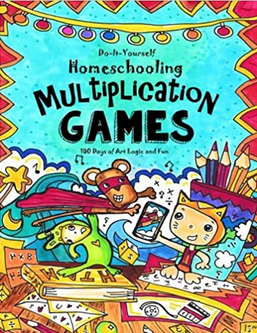
Parents often wonder what the best path to take is after a student has completed Math Craft. We suggest one of our Math journals. They are written in a similar style and will be a good way for students to practice their new skills. Math Mysteries, Comic Book Math, and Math for Minecrafters are especially good options. Multiplication Games is a good journal for students who need help with memorizing their Multiplication tables. 

Families can use our journals exclusively for a few years or combine them with a math curriculum of their choice. Life of Fred is a popular option among many Fun-Schoolers and seems to be Dyscalculia-Friendly because Math is presented as a story. There are many other options out there too! What’s your favorite?

Dycalculia and Math Craft!

While most people are familiar with Dyslexia, Dyscalculia is much less well known. It relates to the ability to understand math and to properly identify numbers. Sometimes folks call Dyscalculia Math Dyslexia. While the two have similarities, Dyscalculia impacts things such as the ability to differentiate between concepts like biggest and smallest, remembering math facts, estimating time, judging distance, retaining numbers, and more.  Children may outgrow Dyslexia- this is rarely the case with Dyscalculia. Those with this learning challenge need to develop skills to properly process and understand math. 

Dyscalculia Statistics

The official numbers state 6%-7% of the population has Dyscalculia. Experts estimate it could be closer to 15%-20% because it is often overlooked. Teachers may think a child is struggling to understand a concept when in reality they have a learning disability. It’s not as easily diagnosed as Dyslexia because of the wide range of progression of math skills among children. Countless adults have spent a lifetime thinking they were bad at math when in reality, they needed to be taught a different way. 

Creation of Math Craft

After Dyslexia Games took off and gained popularity, we started getting requests for a Dyscalculia therapy program. Parents were seeing some Dyscalculia improvement and wanted something deeper. My Mom, Georgia, and I started working together to develop Math Craft.

We developed a series of hands-on games, tactile lessons, abacus work, and logic games like Dyslexia Games. They were tested on my 15 children as well as dozens of children with Dyscalculia. Children stopped counting on their fingers, retained math facts with ease, and were able to understand math concepts for the first time.

The creation of these games has involved extensive testing and research. We wanted them to be effective and fun. They engage the brain in a relaxed state through the games. This removes any mental blocks a child (or adult) may have to math. When we’re having fun, we’re able to learn easier. 

Math Concepts Covered

At the time of this writing, we have five Math Craft books. They are:

  • A-1 covers quantity, matching quantity to numbers, numbers and their numerical symbols, and basic addition with no counting required. 
  • A-2 focuses on addition up to ten without needing to count. 
  • A-3 begins introducing subtraction.  
  • A-4 introduces double-digit addition and subtraction, carrying borrowing, and numbers up to 20 and beyond. 
  • B-1 is for basic multiplication and introduces skip counting.

We suggest all children start with book A-1 unless they have a strong foundation in addition and subtraction and do not count on their fingers. Then they can start with B-1. Children who have a strong addition foundation can start on book A-3, most will need to start with book 1.  More Math Craft materials will come in the future. 

Let’s Talk About Gameschooling!

Who gameschools with their funschool?

Who would like to see what fun, award winning, educational games from SimplyFun would pair well with your funschool journals?

I am having a GAME PARTY and YOUR INVITED. Click here to join:https://www.facebook.com/groups/1092241268046471

11 Simple Games for Mixed Groups of Children, Ages 2 and Up

QUESTION: “We have 14 children in our small group and we try to come up with different games or activities for them when we get together at parks or at homes. You have worked with a lot of children throughout your life. Are there any fun games you can share with us? 

ANSWER: I love games that can be played anytime you need a fun and spontaneous activity for little ones. I also love games that build skills, character, and relationships.  Here are 11 of our favorite “Anywhere Games” that children Ages 2.5 and up really love. None of these games require much planning, reading, or small game pieces, so you can play them anywhere and anytime you need to entertain children of all ages.  The most you will need is a pencil, paper, and stuffed animal or toys that you already have.  A few of these games can be played with no props at all, just imagination and conversation.

1.     What do you like best?
Little Children love to ask questions, and they love to answer questions too.  So we made up a game where we take turns asking questions that help us get to know each child better, and we laugh a lot! 

To Play:  I ask the first question: “Joseph, what do you like best: Bubbles or Squirt Guns?” 

He will give his answer, and then it is his turn, and he will ask someone else in the group his question: “Anna, what do you like best planets or watermelons?”  Then Anna will ask another child “What do you like best lunch or breakfast?”  Then that child will ask another child a question: “What do you like best cookies or cake?”   “Green or Blue?”  “Trees of Flowers?”  “Snow or Sand?”  This game is endless. You may need to tell the kids the rules, we only have on: No Potty Talk.

2.     Should We?
 I made up this game for Joseph to help him to learn right and wrong, and to make good choices in a variety of unexpected situations. This game can also bring lots of laughs! Once again it is a game of questions. My kids love to come up to me and say “Let’s play Should We!”

To Play: Just ask questions to make your child think about the right thing to do in an interesting or everyday situation. Sometimes the kids will enjoy making up their own questions.

“Joseph should eat someone else’s cookie?”

“Should we play in the road?”

“Should we eat dirt?”

“Should we eat carrots?”

“Should we put the cat in the bathtub?”

“Should we hit little babies?”

“Should we help mommy sweep the floor?”

“Should we make cookies with grandma?”

“Should we put cookie dough on grandma’s windows?”

3.     Family Questions (You can play this with any group, the kids love hearing the answers that the adults give too!)

We usually play this conversational game at the dinner table.  With a family of 11 this one can take a lot of time.  It also helps everyone to get to know each other.  Once again it is a Questions Games. 

To Play: Mom or dad usually asks the first question, and everyone takes turns giving their answer.  We usually only get through 3 questions at a meal.  One Rule: No “Yes or No” questions.

We ask questions like these:

“What would you buy if you had $20?”

“What country would you go to if you could go anywhere?”

“What is the most beautiful animal?”

“What do you think we should have for dinner tomorrow?”

“Name one important thing you should think about before you marry someone?”

“If you could have any super power what would it be?”

“What is something you like about the person to your right?”

4.     Drawing on the Ceiling
My husband plays this game when he tucks in the kids at night.  He points to the ceiling with his finger and draws a picture or writes a letter.  The kids try to guess what he is drawing.  They all take turns drawing a picture.  They can give clues like “This is an animal.”

5.     What Animal is It?
My kids love learning about animals, and happen to know the sounds of many interesting and exotic creatures.  All we do is take turns making an animal’s sound and the first one to guess the animal correctly gets to go next.

6.     What Comes Next?
Like most parents, we read the same stories, sing the same songs, and repeat the same rhymes and Bible verses over and over with each child.  Once the words of the story or verse are familiar to the child I will  give the child a chance to finish each line. Children ages 2 to 5 love this. When you are teaching or entertaining a group of children use this activity when telling a story or memorizing a verse.  With older children you can increase the number of words for them to fill in until the child can recite the entire verse alone. This works well for groups, because the children can all shout out the missing words together. 

“For God so loved the _____________.”

“Mary had a little _________.”

“How much is that doggie in the ______________.”

“In the great green room there was a telephone and a red _______________.”

“Jesus Loves ____ This I ________.” (click here to continue reading)