Early Education: A Playground for Real-World Skill Development

In our family of 15, we don’t view k-12 education merely as a stepping stone to college. Our kids don’t even know what “grade” they are in half the time.

Instead of focusing on traditional academics, we see childhood as an exciting opportunity for our kids to begin crafting real-world skills centered around their passions.

As a homeschooling mom I get to create an environment for learning that inspires each child in the pursuit of their unique dream or calling, while exploring fulfilling options for a career.

Ages 2-5
From the outset, we introduce our kids to stories of passionate people who never give up, do great things and solve problems in the world. We are laying the groundwork for a life where work and calling intertwine. We love to read about people and find out about the jobs of the people we meet, from the high call of being a mommy or daddy, to the world-shaping influence of authors, political figures, heroes, artists and inventors.

I remember when my son Joseph was five, when he would meet someone new he would say “Hi, my name’s Joseph, I’m a scientist. What are you?”

Ages 6-9
We help our children to start a tiny business and engage with the world in ways that spark creativity and entrepreneurship.

  • Isaac’s bracelet-making and sword crafting were not just about making money but about igniting his creative and business acumen.
  • Leah, Ember, and Lilly’s craft sales at festivals were lessons in art, economics, and teamwork.
  • Rachel’s book reselling taught her about value, negotiation, and her love for literature.
  • Esther’s bath salts business combined chemistry with marketing, all while following her interests.

Ages 9-12
We deepen their engagement with their passions:

  • Providing resources like an aviary for Laura who is passionate about birds or a piano for Joseph who is gifted in music – these gifts allow them to live their passions daily.
  • We emphasize learning by doing, ensuring that education is not abstract but connected to real-life applications. Why learn something from a book when you can do it in real life? As homeschoolers we are not limited by the walls of a classroom!

Ages 13-20
Here, we move from exploration to mastery:

  • Investing in their vision on their 13th birthday We provide them with real tools to build their dreams, whether they lead to a career or a calling.
  • Skills taught are those they’ll use in their chosen paths, like marketing, leadership, or specialized knowledge.
  • We limit distractions to keep their focus on what truly excites and fulfills them. No phones until they are ready to run a business that requires it. They have to pay for their own phone, and we parents put filters on the device to keep the kids safe and productive.

Click here to keep reading!

How to Spot Your Child’s Natural Interests

What is a natural interest? A natural interest is an area of life that you’re drawn to! For a lot of people, they might call this their hobby or side project. Natural interests can cover a vast variety of subjects – from a specific animal to the overarching act of reading, to drawing with charcoal or recording/writing music! Natural interests are our callings. So how do you spot this in your child from an early age?

Identifying your child’s natural interests can help guide their growth and learning! Here are some simple ways to spot what excites and intrigues them:

  1. Observe Their Early Play: Pay attention to the activities they choose most often — whether it’s building, drawing, or imaginative play! These can reveal their passions, such as an interest in architecture, fashion, or writing creative stories!
  2. Follow Their Questions: The “why” and “how” questions they ask can point to what they’re curious about, like science, nature, or history!
  3. Notice What Captures Their Attention: Take note of what they focus on for long periods and what they ask to learn more about — this shows what they’re naturally drawn to!
  4. Encourage Exploration: Provide different activities (arts, sports, books) and see what excites them the most! Giving them a variety of topics to learn about can help you notice which ones they focus on the most! By observing your child’s play, questions, and actions, you can help nurture their natural interests and encourage their growth!

Learn more about preparing your child for their future calling/career here.

Find journals for every possible area of interest imaginable by clicking the image below!

Take a Break!

Sometimes a break from school really gives parents time to help a child with a problem area so she can go back to school with new skills and confidence.

How do you do it? I would just let them play most of the time but spend about an hour focusing on the problem area. It’s a great time for dyslexia therapy or some multiplication games.

Sometimes the school schedule is so packed that a break like this offers us a chance help our kids grow in a specific area so they can go back to school stronger in the problem area.

Also, some kids have passions that they don’t have time for during the school year. I have a daughter who was obsessed with parrots and endangered species. It was a perfect time to let her “major in parrots” and learn to dig deep into a topic she really loves.

So we put together a Fun-Schooling basket full of stuff that helps her research birds and Endangered Species. It’s easy to focus because she’s so passionate.

So, during a break from school I would suggest only two things:

1. Zero in on just ONE problem area so the child can overcome some of her struggles.

We use DyslexiaGames.com for reading, writing and spelling problems. It’s so easy to use.

Try Math Craft for problems with basic math and multiplication.

2. Give the child resources based on their passion, and really make time for that passion. What is your child passionate about?

It’s exactly what we would do on summer vacation since this is a chance to focus on strengths and weaknesses, letting everything else go.

Besides that, the kids can have a blast and stay busy being creative, playing video games, watching movies, cooking their own meals, exploring nature, training a pet, learning new skills, and being together. The possibilities are endless!

Example of a Horse Lovers Fun-Schooling Basket

Sarah’s Mom Tips – Choosing a Major & Why 13 Is the Magic Number

I have noticed that between age 11 and 14 every child begins to develop a deep interest in one or two specific areas. If we don’t discourage them they can become experts. If they don’t embrace that passion for a specific career at that point they often drift into a season of fog where they don’t feel like they have purpose. At that point many teens drift into rebellion, confusion or a feeling of being aimless and like their lives have no value.
The kids who are encouraged to dig deep into their passion as a young teen develop a healthy and confident perspective. Even if they change “majors” they will never forget the skills they learned.

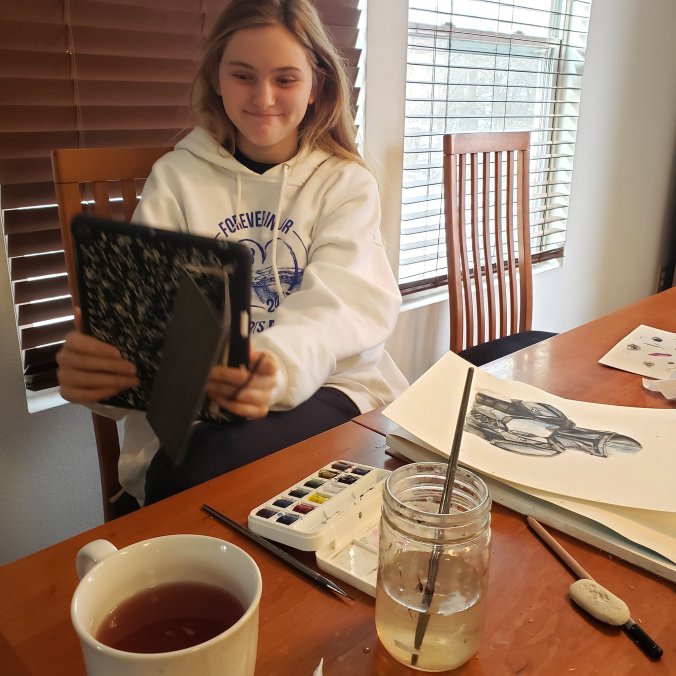
One of the most important ways we can invest in our children’s talents is by NOT distracting them or diverting their attention when they are focused on a project. I give my kids vast amounts of time to pour into their passions. Even if it means setting aside my preconceived ideas about what a kid should do and learn at their grade level. This is my daughter Susannah, she’s 14, and is focused on art.


Kids forget most of the information that they do not use, but once they learn a skill it is theirs for a lifetime.
What is your child passionate about? What careers relate to it? Is it a topic that other people are interested in? If your child spends a few years becoming an expert in that area they will be able to build a portfolio, and have real life experience in that field.
As an older teen they can volunteer to assist someone who is a professional in that field and get their foot in the door. Once they show their value, they can begin to be an important part of that business, so valuable that they will get a position working in that field.
At this point, as a young teen, they need to focus on people skills, leadership skills, teamwork, and character building.
I have seen many people take this path into the business world, where they end up doing what they love, and getting paid well for it.